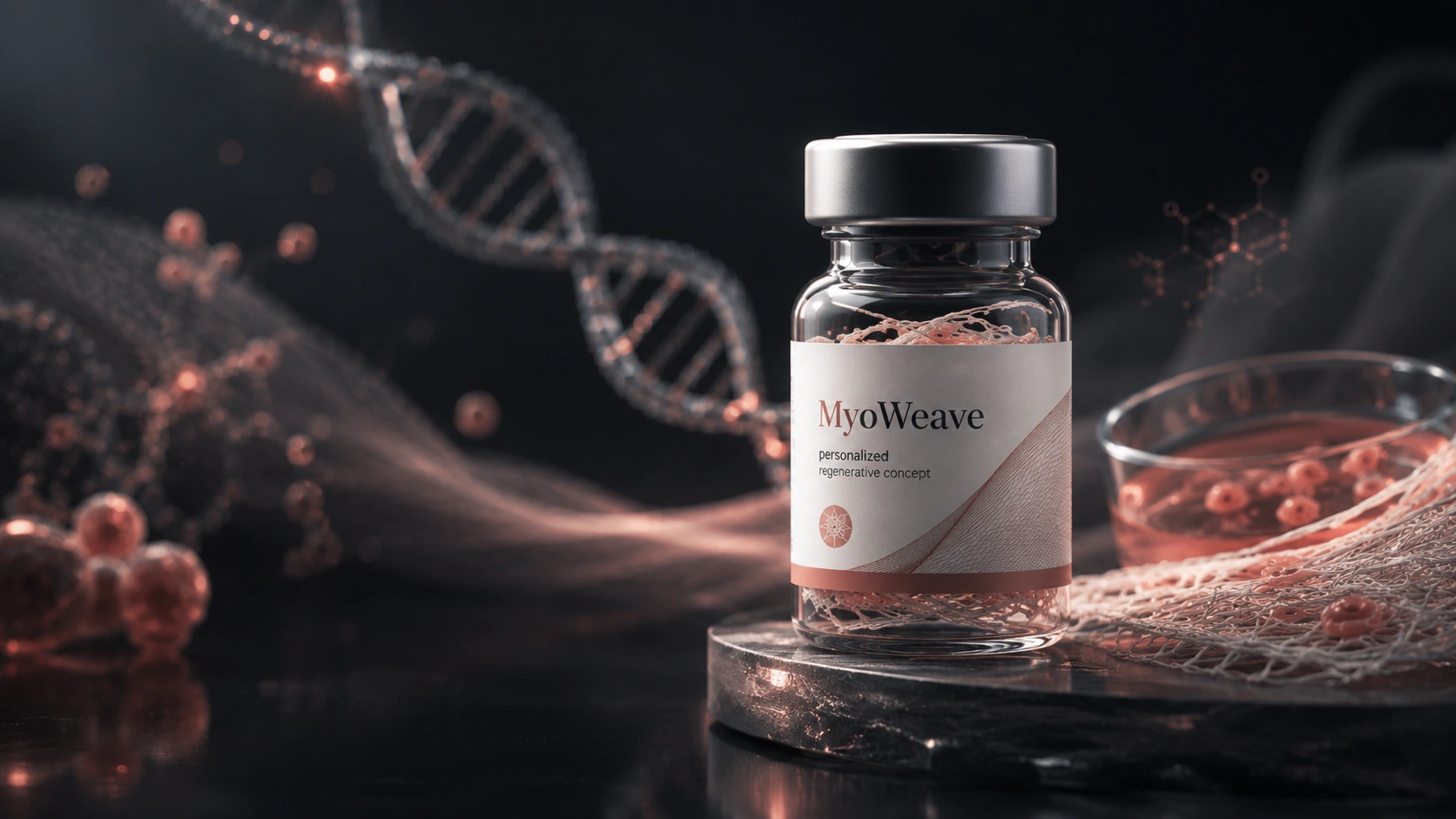
MyoWeave
A concept-stage regenerative-medicine strategy combining patient-derived hiPSCs, CRISPR-Cas9 gene correction, lipid nanoparticle delivery, myogenic differentiation, and electrospun nanofiber scaffolds for Duchenne muscular dystrophy.
GENOME INDONESIA INTERNATIONAL INSTITUTE OF LIFE-SCIENCES 2025
1st Winner - GENOME English Essay Competition
March 2025
Problem
Translating a personalized muscle regeneration strategy for DMD requires addressing genetic correction, stem-cell engineering, structural scaffold support, preclinical safety, and multi-pillar access planning in an integrated framework.
PROJECT OVERVIEW
At a glance
Therapeutic Concept
Patient-specific gene-edited cell and scaffold strategy
Genetic Focus
Dystrophin-associated Duchenne muscular dystrophy
Delivery Architecture
Patient-derived hiPSCs, LNP-assisted editing, and nanofiber scaffold
Strategic Scope
Gene correction, cell engineering, biomaterials, development, and access
MyoWeave explores how a personalized DMD regenerative-medicine concept could connect patient-derived cells, CRISPR-Cas9 gene correction, myogenic differentiation, electrospun nanofiber scaffolds, translational development, and access planning.
This case study presents a competition-developed, concept-stage therapeutic strategy. The proposed gene-editing, stem-cell, scaffold, implantation, and development activities were not completed as a preclinical, clinical, or commercial program.
PROJECT CONTEXT
Why MyoWeave was developed
Duchenne muscular dystrophy (DMD) is a severe, progressive muscle-wasting disorder caused by mutations in the dystrophin gene. Existing therapeutic approaches focus primarily on symptom management or slowing progression rather than restoring functional muscle tissue. MyoWeave was developed as a competition-based concept exploring how patient-derived cells, CRISPR-Cas9 gene correction, and biomaterial scaffold engineering could be brought together into a unified personalized regenerative-medicine strategy.
STRATEGIC ARCHITECTURE
Integrated personalized therapy architecture
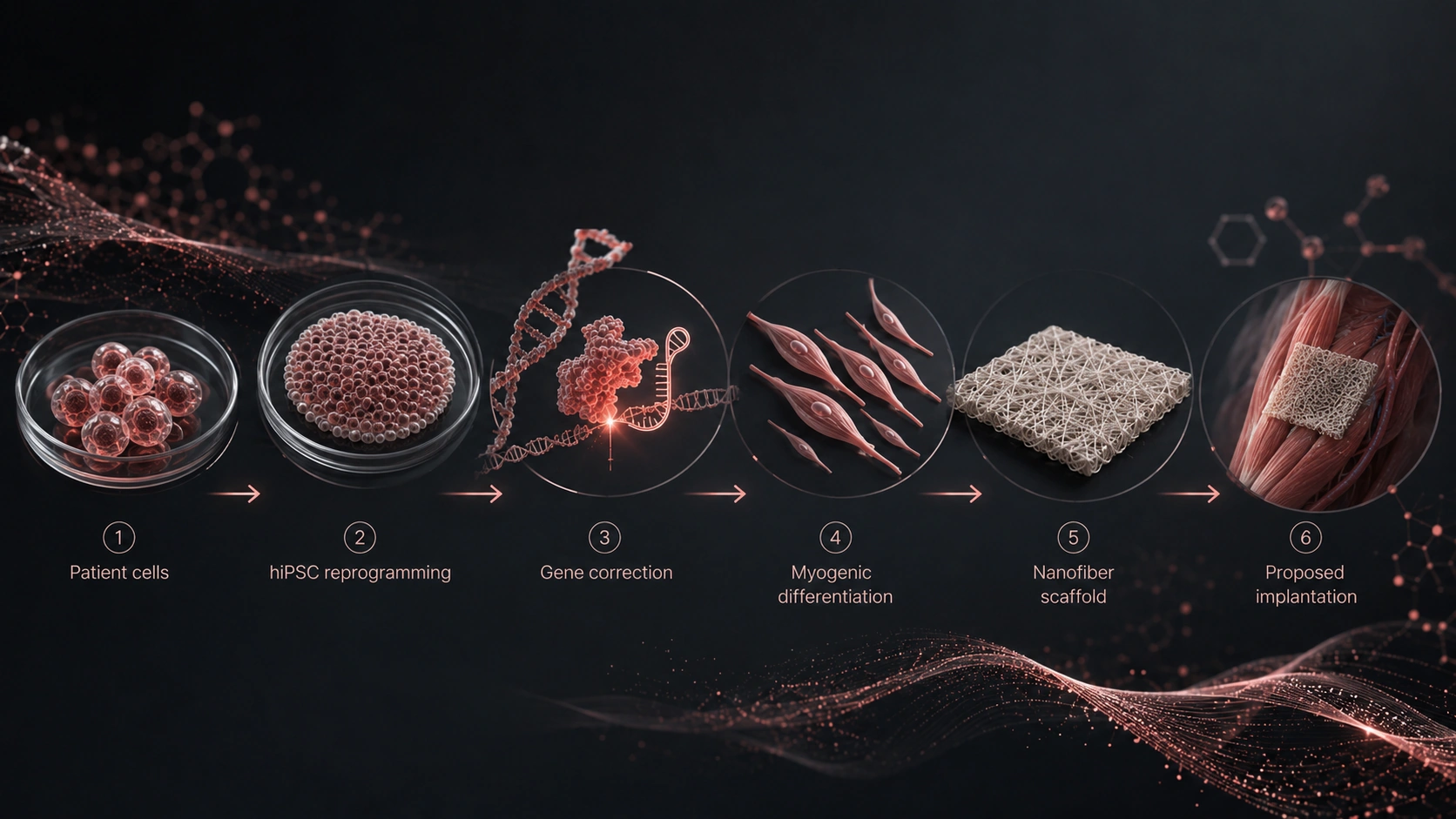
The therapy architecture outlines a multi-step personalized strategy connecting autologous cell harvesting, reprogramming, genetic repair, cellular differentiation, scaffold integration, and surgical delivery concepts. The visual illustrates a conceptual pipeline rather than completed clinical protocol evidence.
Strategic pipeline stages
Patient dermal fibroblast collection and initial culture
Reprogramming to human induced pluripotent stem cells (hiPSCs)
LNP-assisted CRISPR-Cas9 dystrophin sequence correction concept
Directed myogenic differentiation into skeletal muscle progenitors
Seeding onto aligned electrospun collagen-PCL nanofiber scaffolds
Proposed scaffold-supported muscular implantation hypothesis
GENE-CORRECTION SYSTEM
CRISPR-Cas9 and LNP correction concept
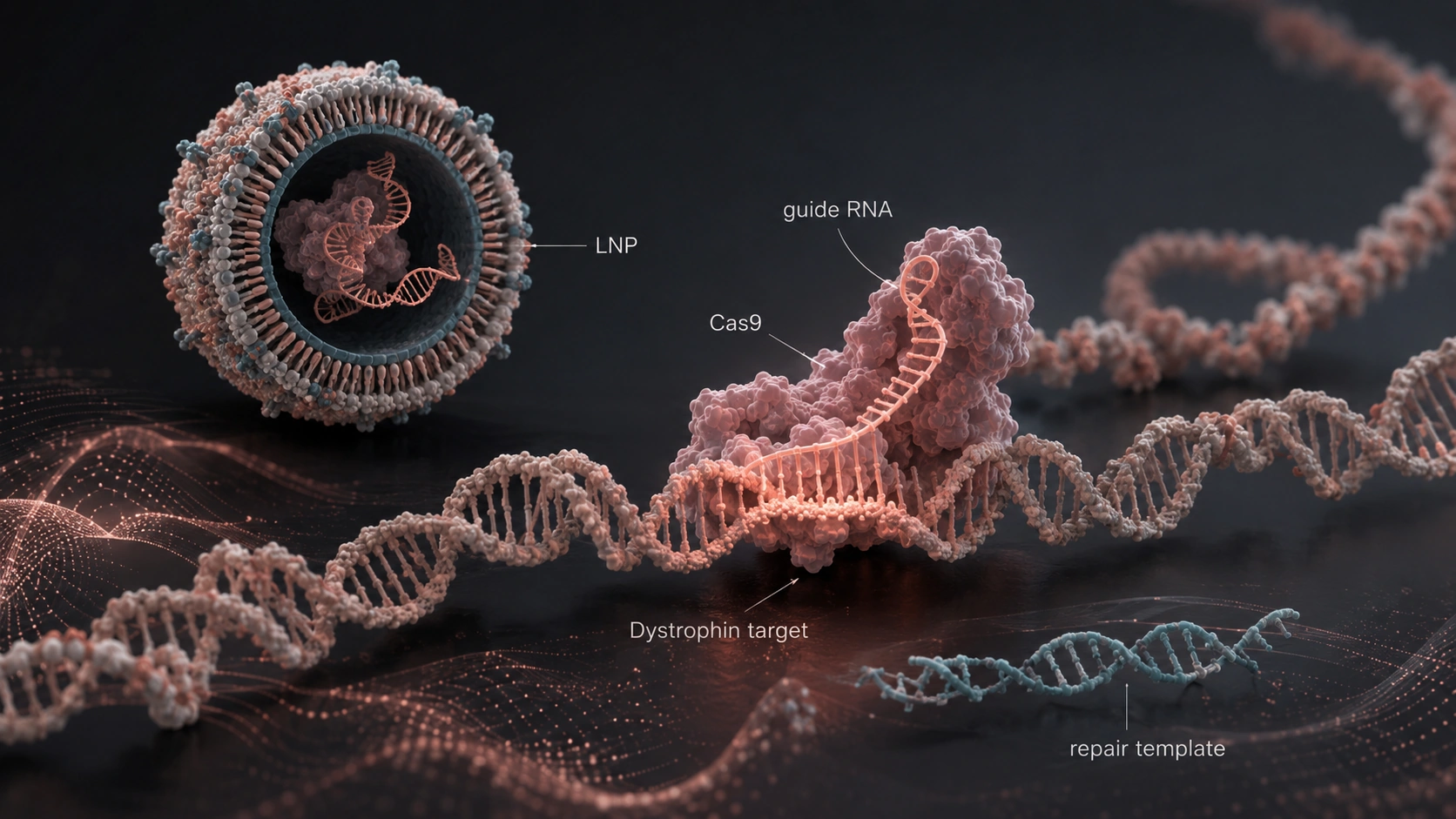
The gene-correction strategy outlines a molecular repair concept designed to restore the reading frame of pathogenic dystrophin variants. Cas9 mRNA and targeted guide RNAs are encapsulated within lipid nanoparticles to enable non-viral delivery into patient-derived stem cells.
Gene-correction components
Specific guide RNA selection targeting mutated dystrophin exons
Non-viral lipid nanoparticle formulation for RNA encapsulation
Intracellular Cas9 translation and nuclear localization concept
Target locus cleavage and homology-directed repair hypothesis
CELL-ENGINEERING PATHWAY
Patient-derived hiPSC pathway
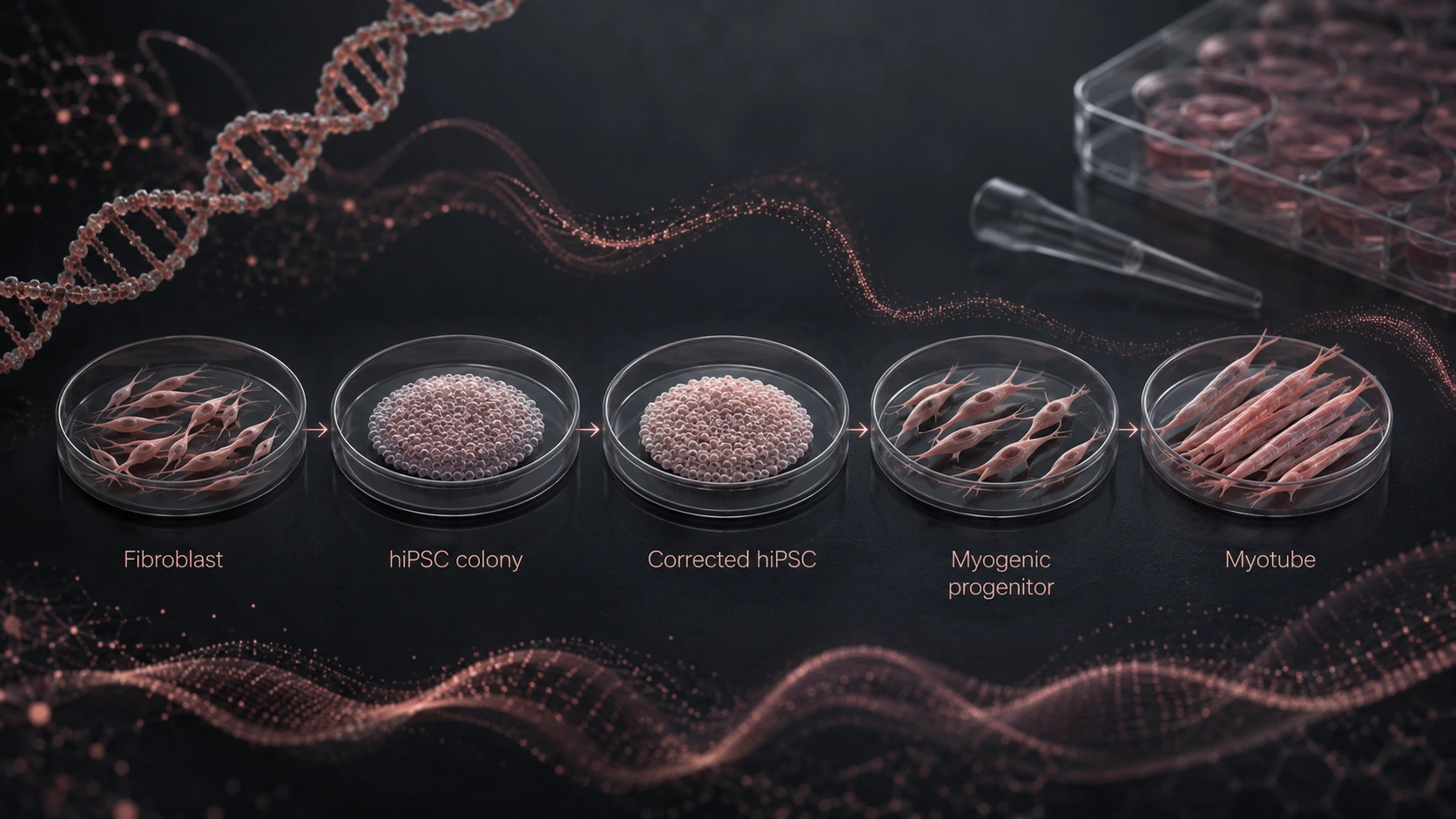
The cellular engineering pathway details the transition from patient somatic cells to autologous muscle progenitor populations. Reprogramming dermal fibroblasts into hiPSCs provides an expandable, patient-specific cell source capable of undergoing gene editing prior to lineage commitment.
Cell-engineering sequence
Non-integrating viral or mRNA-based fibroblast reprogramming
Pluripotency characterization and clonal line expansion
Targeted CRISPR-Cas9 dystrophin correction protocol concept
Directed differentiation into Pax7-positive myogenic progenitors
Maturation into multinucleated myotubes on supportive substrates
SCAFFOLD ENGINEERING
Electrospun nanofiber scaffold system
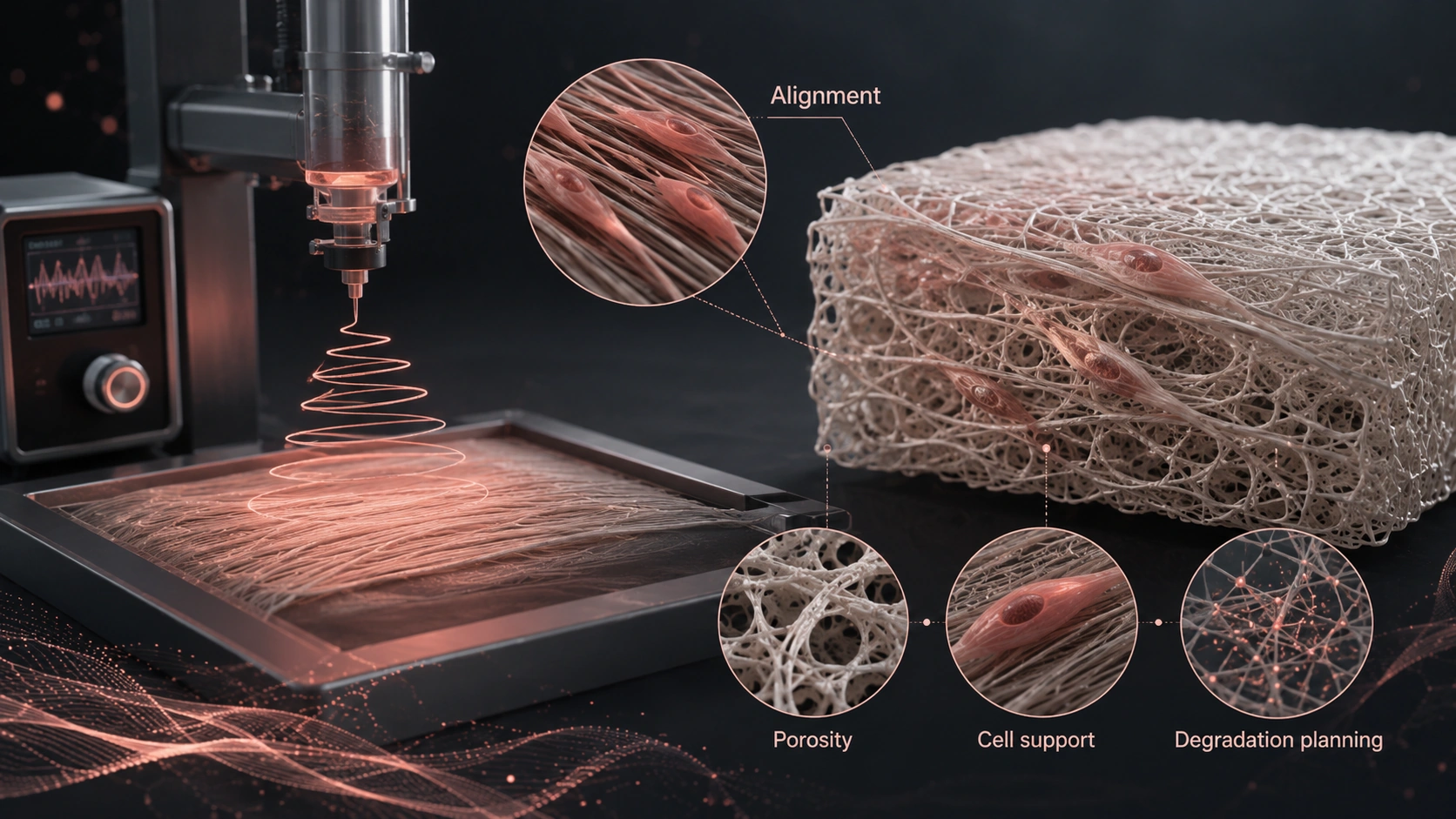
The biomaterial architecture proposes an electrospun composite scaffold blending natural collagen with synthetic polycaprolactone (PCL). The micro-environment is engineered with aligned nanofiber topography to mimic native skeletal muscle extracellular matrix, supporting cell attachment, directional alignment, and mechanical stability.
Biomaterial design parameters
Electrospun collagen-PCL fiber blend for bioactivity and mechanical strength
Anisotropic fiber alignment to guide linear myotube formation
Interconnected porosity for nutrient transport and cell infiltration
Degradation kinetics tuned to match native tissue remodeling rates
DEVELOPMENT STRATEGY
Proposed preclinical framework
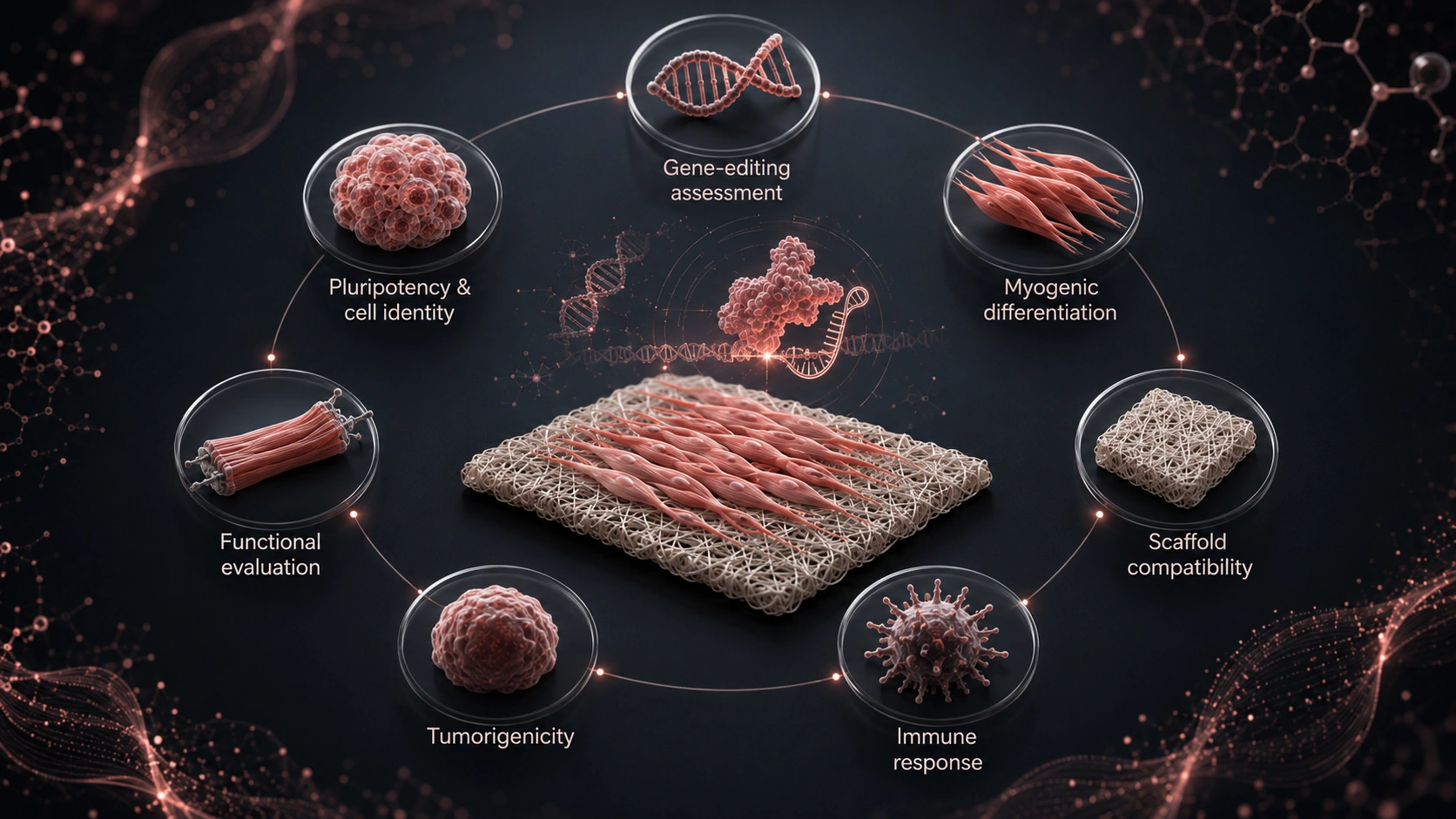
Preclinical development requires a comprehensive testing framework spanning molecular safety, cell identity, structural integrity, and tissue integration prior to clinical translation.
Proposed evaluation domains
Genomic editing efficiency, indel profiling, and off-target screening
Karyotypic stability, pluripotency loss, and residual stem cell clearance
Myogenic differentiation efficiency and dystrophin protein expression
Scaffold biocompatibility, degradation rate, and mechanical compliance
Autologous immune response characterization and local inflammation monitoring
Tumorigenicity and ectopic tissue formation screening in animal models
In vivo muscle force generation and functional integration assessment
ACCESS ROADMAP
Access and implementation roadmap
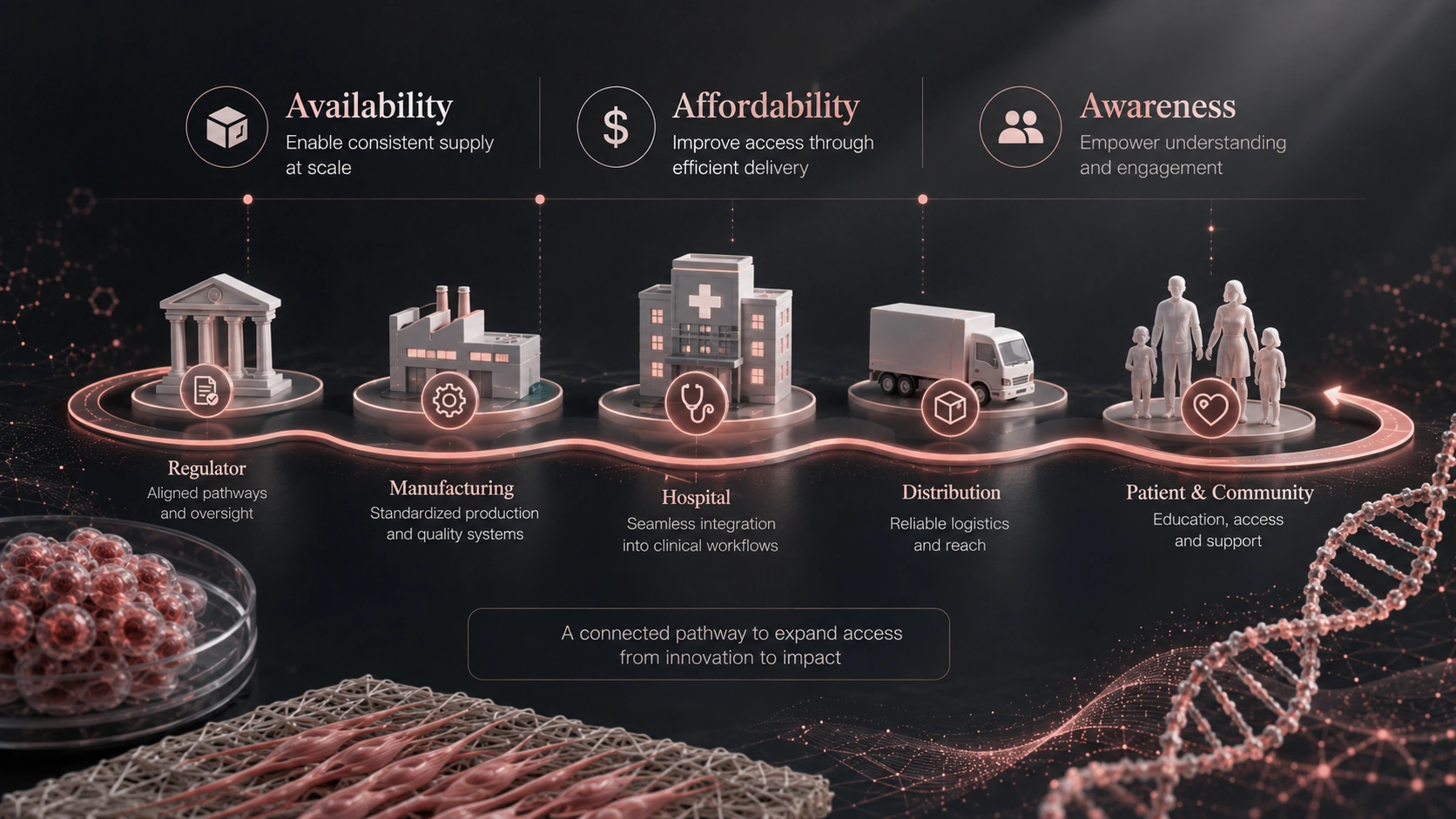
Translating personalized cell and biomaterial therapies requires addressing manufacturing complexity, specialized hospital infrastructure, and equitable patient access. The roadmap provides a strategic framework balancing technological feasibility with healthcare delivery requirements.
Three implementation pillars
Availability: Regional cell processing facilities, GMP cleanroom networks, and cold-chain logistics
Affordability: Automated manufacturing scale-out, reimbursement planning, and value-based healthcare models
Awareness: Neuromuscular specialist education, patient advocacy collaboration, and clinical trial transparency
FINAL CONCEPT
Project outcome
MyoWeave translates a personalized DMD regenerative-medicine hypothesis into an integrated concept spanning patient-derived cell engineering, CRISPR-Cas9 correction, LNP delivery, myogenic differentiation, nanofiber scaffolds, translational planning, and access strategy.
No preclinical, clinical, regulatory, manufacturing-scale, or commercial validation was completed as part of this competition-developed concept.
Contribution
Personalized cell-engineering sequence design, CRISPR-Cas9 editing hypothesis formulation, nanofiber scaffold integration strategy, and translational roadmap synthesis.
Reflection
Demonstrated how gene-editing technology, stem-cell biology, and tissue-engineering scaffolds can be synthesized into an integrated personalized strategy for complex genetic muscular disorders.