BrugaGene
A concept-stage strategy integrating CRISPR-Cas9, cardiac-targeted lipid nanoparticles, a reconstituted product system, preclinical planning, manufacturing, risk mitigation, and access considerations.
PHARMANOVA ITB 2025
Top 5 Finalist - Pharmaceutical Industrial Case Study
February 2025
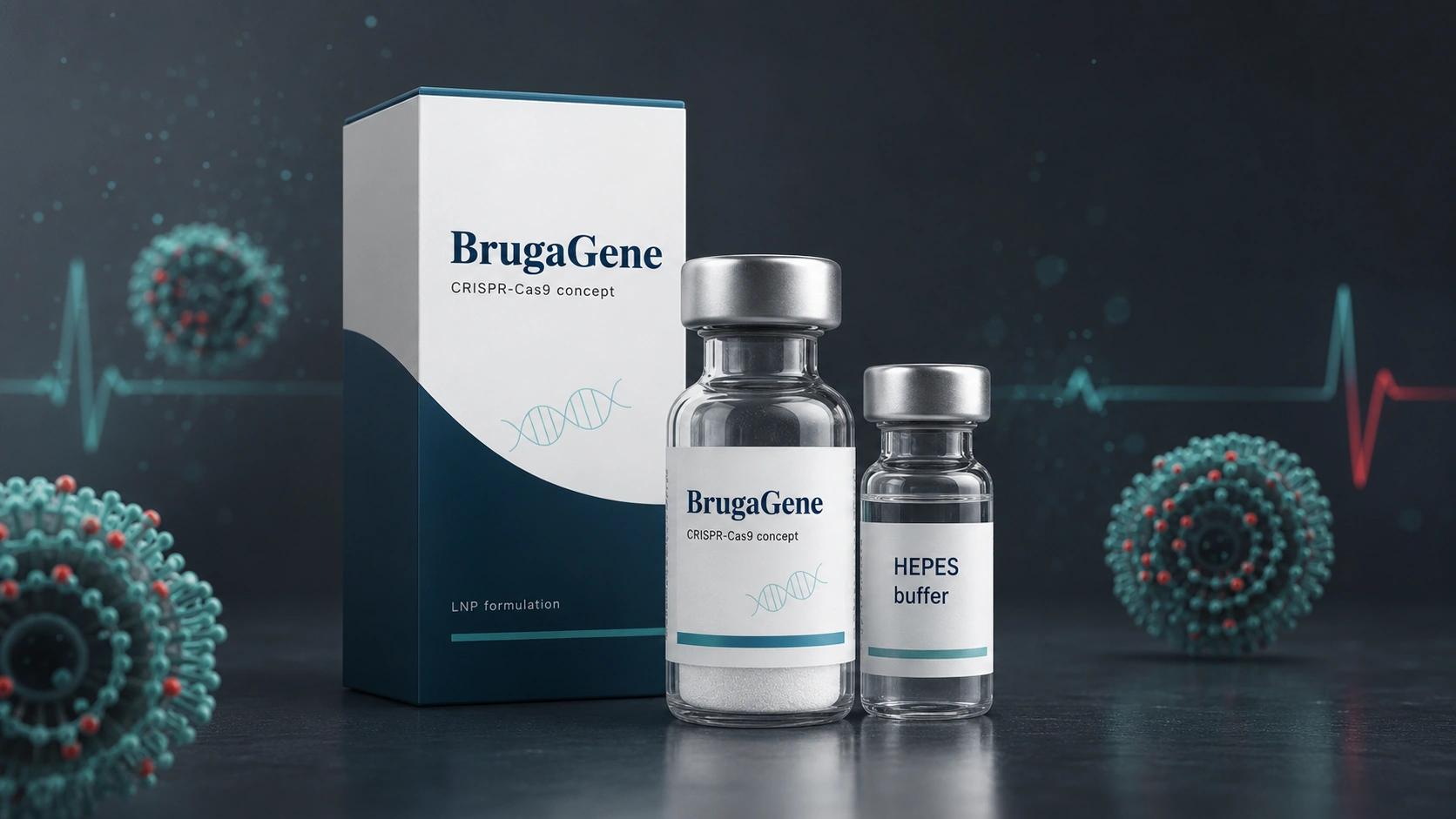
Problem
Translating an SCN5A-associated cardiac gene-editing hypothesis requires addressing delivery precision, product stability, preclinical risk, manufacturing reproducibility, and access planning simultaneously.
PROJECT OVERVIEW
At a glance
Product Concept
Lyophilized gene-editing candidate for reconstitution
Genetic Target
SCN5A-associated Brugada syndrome
Delivery Platform
Cardiac-targeted lipid nanoparticles
Strategic Scope
Delivery, development, manufacturing, risk, and access
BrugaGene explores how a cardiac gene-editing hypothesis could be translated into an integrated product and development strategy spanning CRISPR-Cas9 correction, targeted lipid nanoparticle delivery, reconstitution, preclinical planning, manufacturing, and access.
This case study presents a competition-developed, concept-stage gene-therapy strategy. BrugaGene has not undergone preclinical or clinical validation and does not represent an approved therapy. Product, dosing, efficacy, safety, pricing, and launch assumptions are illustrative.
PROJECT CONTEXT
Why BrugaGene was developed
Translating a cardiac gene-editing hypothesis into a clinical candidate requires addressing molecular correction, delivery precision, formulation stability, manufacturing scalability, and patient access together. BrugaGene was developed as a competition-based concept exploring how CRISPR-Cas9 technology and peptide-functionalized lipid nanoparticles could be framed within a complete translational product strategy for SCN5A-associated Brugada syndrome.
GENE-EDITING SYSTEM
CRISPR-Cas9 correction concept
The gene-editing strategy outlines a proposed molecular repair concept targeting pathogenic SCN5A sequence variations associated with Brugada syndrome. The visual illustrates sequence recognition, guide RNA positioning, Cas9-mediated double-strand cleavage, and template-directed repair as a conceptual mechanism rather than an experimentally validated gene-editing protocol.
Conceptual gene-editing sequence
SCN5A target sequence recognition and genomic locus selection
Specific guide RNA (sgRNA) design and positioning
Cas9 endonuclease binding and double-strand DNA cleavage
Template-guided homology-directed repair concept

DELIVERY ARCHITECTURE
Cardiac-targeted lipid nanoparticle delivery
The delivery architecture explores a non-viral carrier concept designed to encapsulate Cas9 mRNA and sgRNA within a lipid nanoparticle matrix. Surface functionalization with a cardiac-homing peptide is proposed to support future evaluation of cardiomyocyte tropism, cellular uptake, endosomal escape, and intracellular cargo delivery.
Delivery platform components
Ionizable lipid core for RNA encapsulation and endosomal release
Helper lipids and cholesterol for structural stability and membrane fusion
PEGylated lipids to prevent rapid systemic clearance and aggregation
Surface cardiac-targeting peptide for cell-specific recognition

PRODUCT SYSTEM
Reconstituted product system
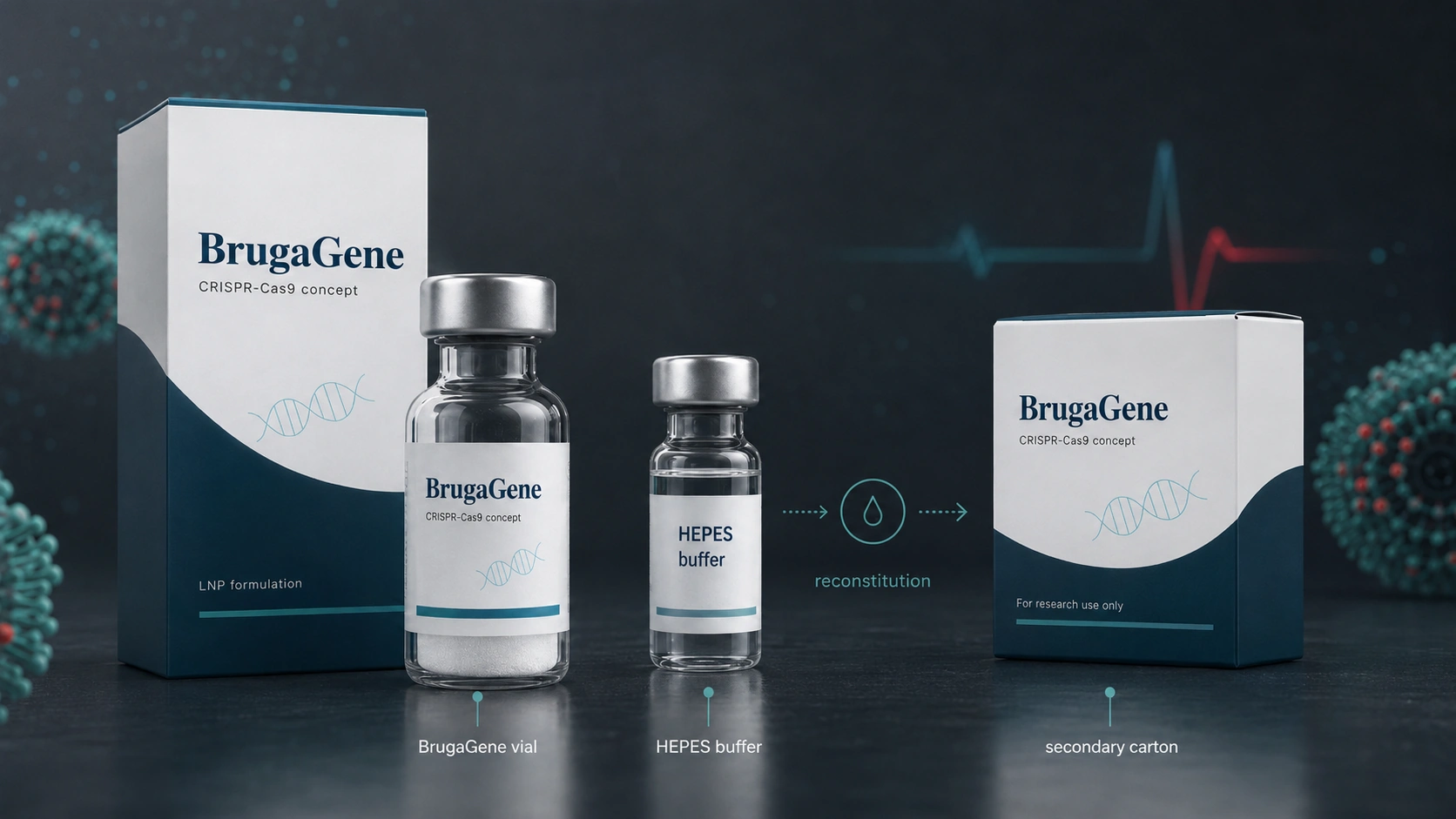
The product presentation proposes a two-vial reconstitution system consisting of lyophilized BrugaGene nanoparticles and a sterile HEPES buffer vehicle. Lyophilization is included as a conceptual approach to preserve nanoparticle integrity and cargo stability during storage, requiring controlled reconstitution prior to administration.
Product system elements
Lyophilized BrugaGene primary vial containing stabilized LNPs
Sterile HEPES buffer diluent vial for reconstitution
Stepwise reconstitution and mixing workflow concept
Protective secondary carton and cold-chain packaging system
DEVELOPMENT STRATEGY
Preclinical development and risk strategy
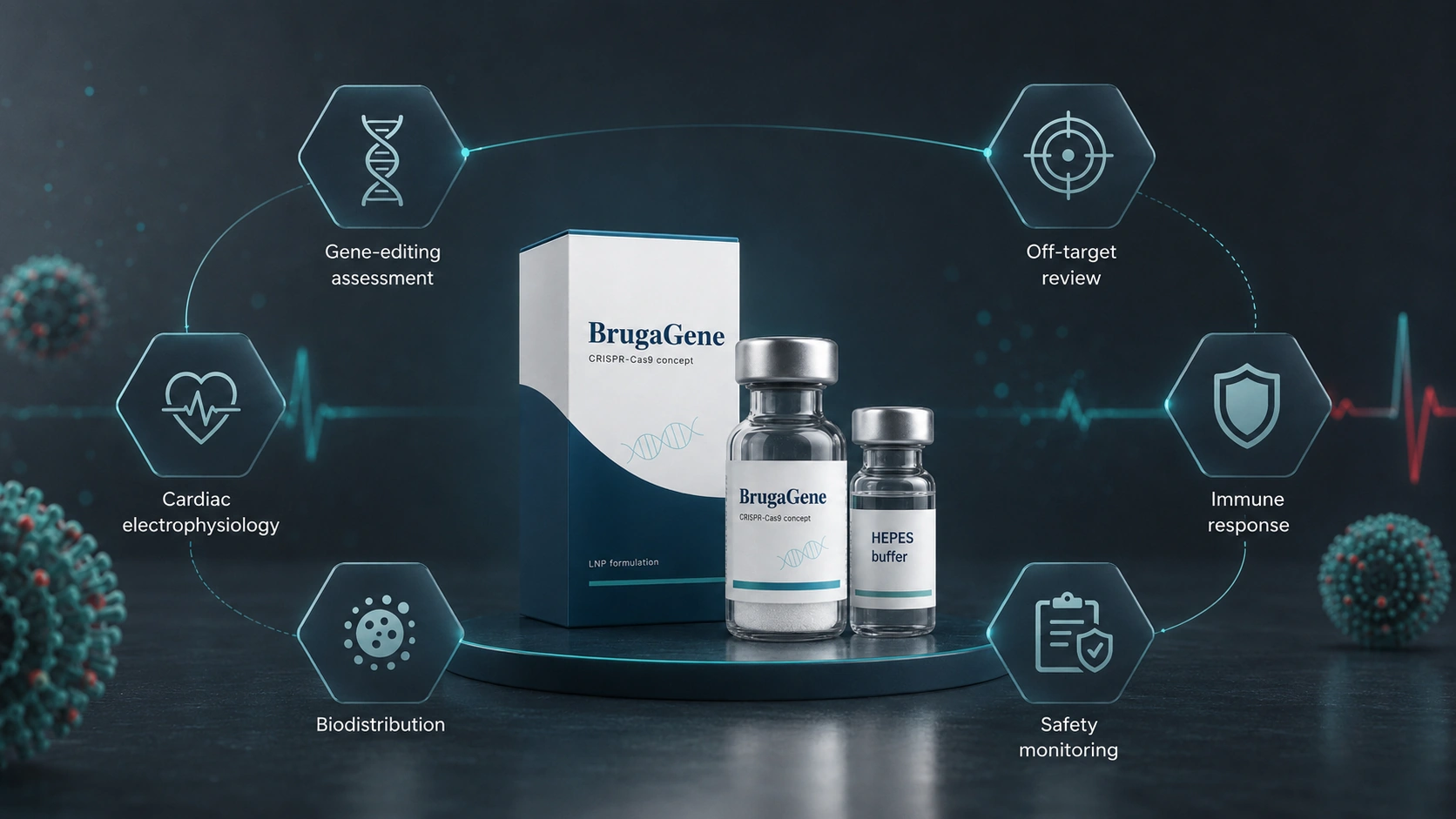
Preclinical evaluation would require a structured testing program to assess editing efficacy, electrophysiological impact, tissue distribution, genomic safety, and immunogenicity before advancing the concept into translational studies.
Proposed evaluation domains
Gene-editing efficiency and allele-specific repair assessment
Cardiac electrophysiology and sodium-current characterization
In vivo biodistribution and organ tropism profiling
Comprehensive off-target cleavage and genomic toxicity screening
Innate and adaptive immune response evaluation
Longitudinal safety monitoring and systemic toxicology
MANUFACTURING SYSTEM
Manufacturing and quality architecture
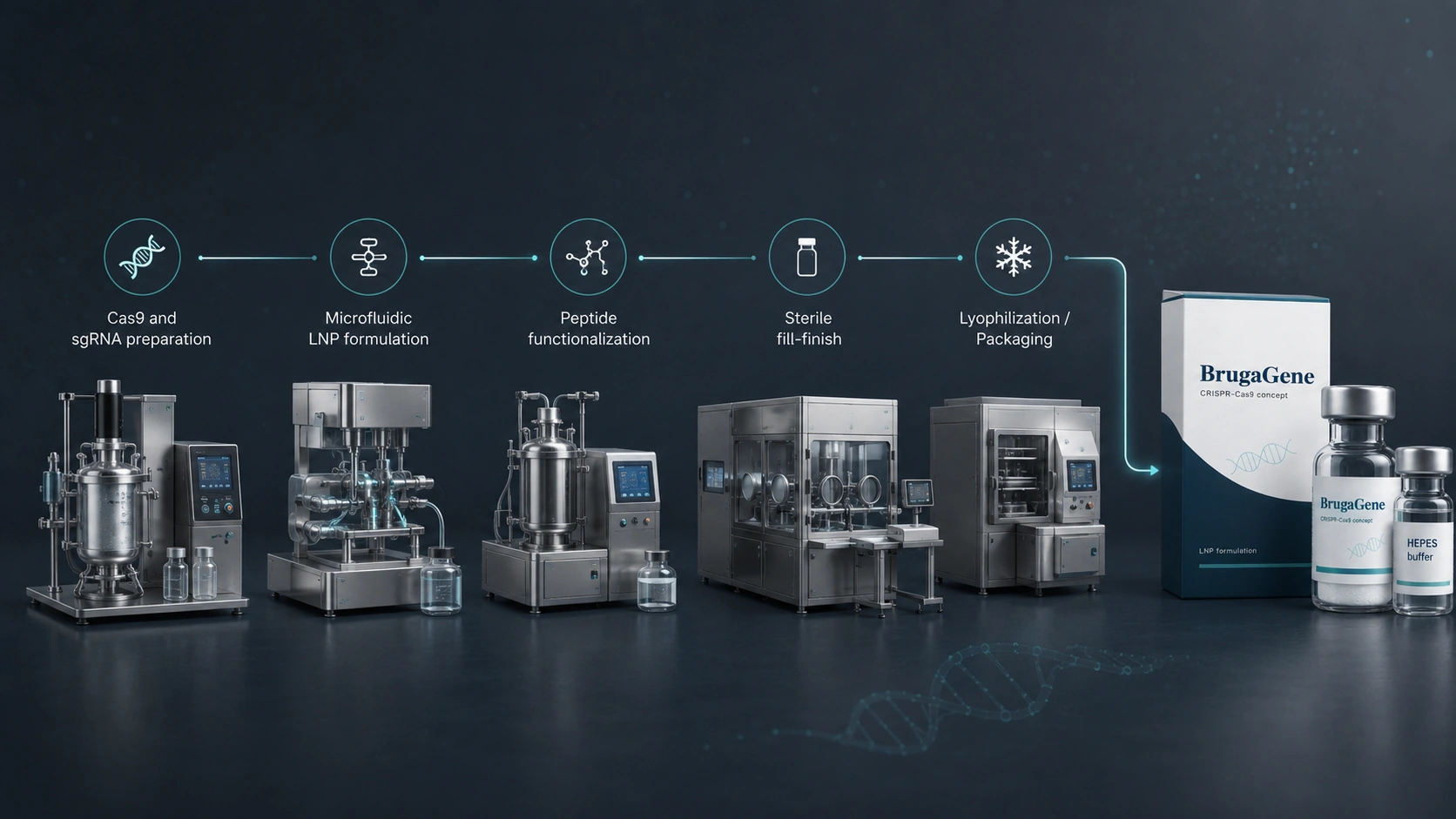
The manufacturing concept maps an end-to-end production sequence combining microfluidic LNP assembly, peptide conjugation, purification, sterile fill-finish, and lyophilization. Process development would require strict quality controls over particle size, encapsulation efficiency, peptide density, and sterility.
Proposed process sequence
In vitro transcription and purification of Cas9 mRNA and sgRNA
Microfluidic self-assembly of lipid nanoparticle core
Post-insertion surface conjugation of cardiac-targeting peptide
Tangential flow filtration and sterile 0.22 µm filtration
Aseptic fill-finish, lyophilization, and secondary packaging
TRANSLATION ROADMAP
Regulatory, manufacturing, and access roadmap
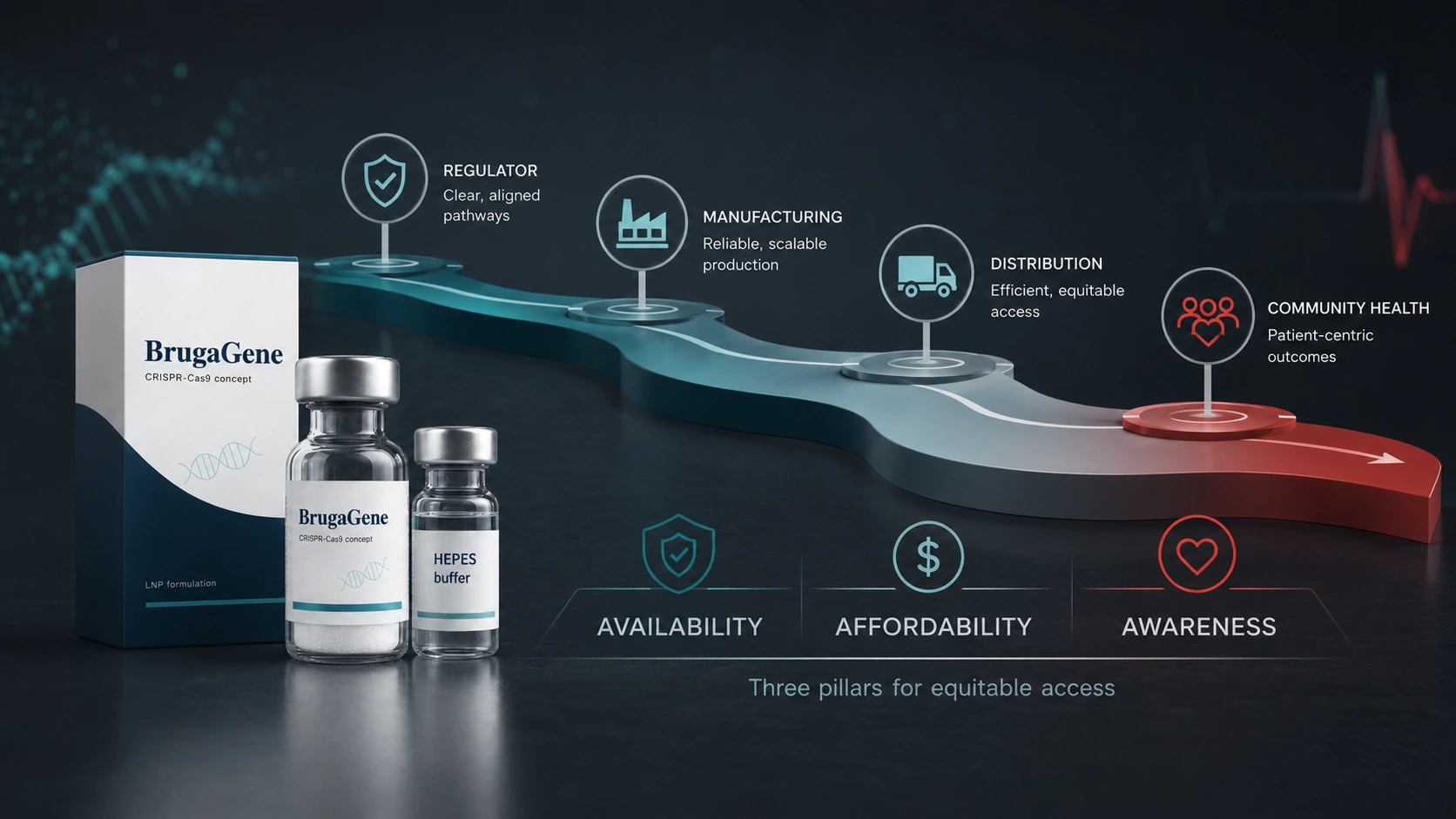
The translational roadmap connects regulatory strategy, manufacturing scale-up, distribution logistics, and public-health accessibility. The framework highlights that advanced gene-editing therapies require proactive planning for supply-chain resilience, cost optimization, and equitable patient access.
Three implementation pillars
Availability: Cold-chain distribution networks and regional manufacturing hubs
Affordability: Value-based pricing models, health technology assessment, and access funding
Awareness: Cardiologist education, genetic counseling support, and patient advocacy
FINAL CONCEPT
Project outcome
BrugaGene translates a complex cardiac gene-editing hypothesis into an integrated development concept spanning targeted delivery, product architecture, preclinical evaluation, manufacturing, risk mitigation, and access planning. The strategy remains conceptual and would require extensive experimental, regulatory, and clinical validation.
No preclinical, clinical, regulatory, manufacturing-scale, or commercial validation was completed as part of this competition-developed concept.
Contribution
CRISPR-Cas9 strategy conceptualization, targeted LNP delivery architecture, product reconstitution system design, and preclinical/manufacturing roadmap synthesis.
Reflection
Demonstrated how molecular gene-editing hypotheses must be paired with pharmaceutical delivery, manufacturing, safety, and access frameworks to create a complete translational strategy.