Rifaxenta
A competition-based pharmaceutical strategy integrating wet granulation, enteric coating, process controls, quality evaluation, risk assessment, and an accessibility framework for rifapentine.
24TH IPSF ASIA PACIFIC PHARMACEUTICAL SYMPOSIUM 2025
2nd Runner-Up - Industrial Skills Event (International)
July 2025
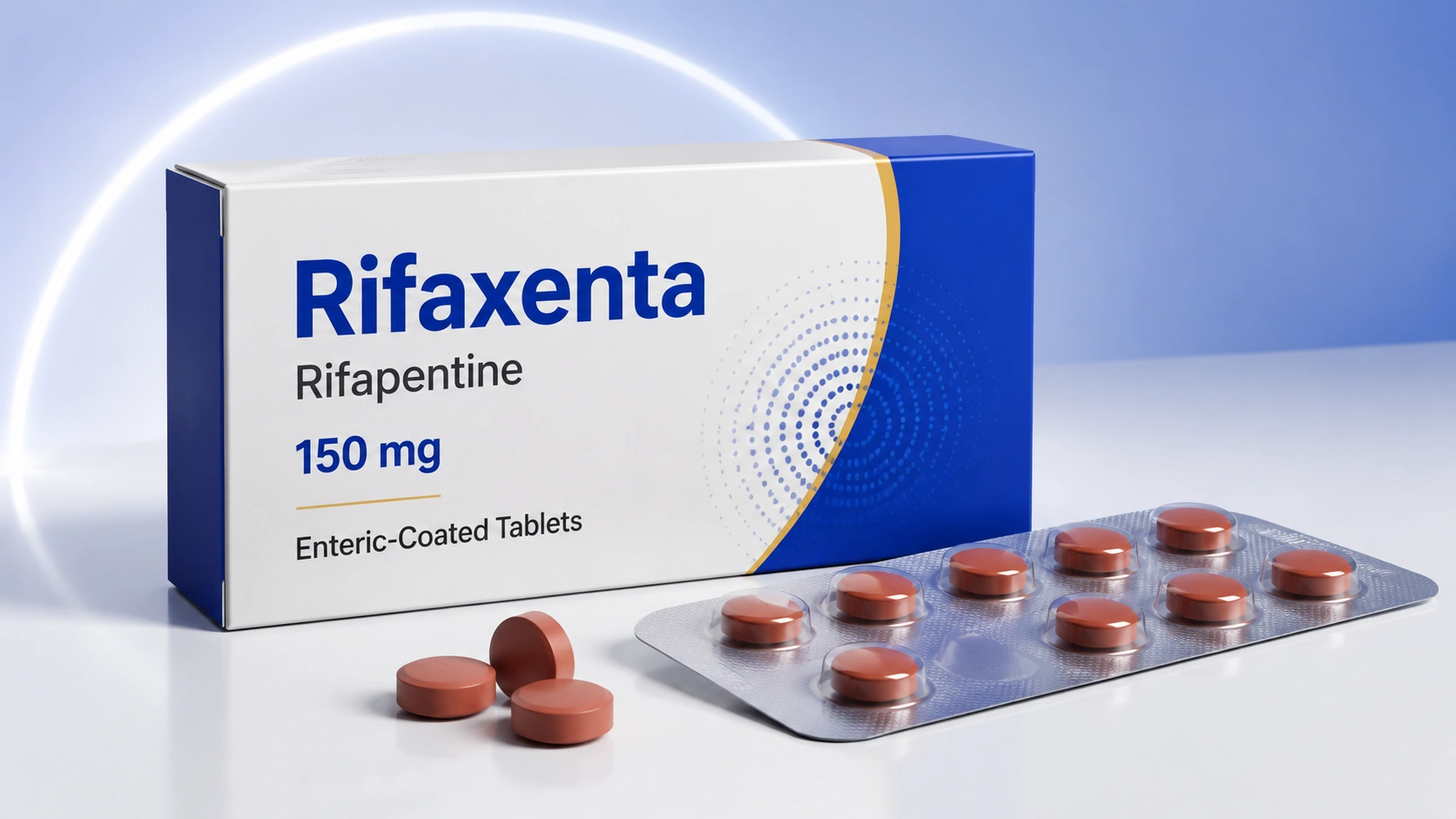
Problem
Tuberculosis care can involve long treatment periods, pill burden, adherence challenges, and supply constraints, requiring integrated dosage-form design, manufacturing control, and accessibility planning.
PROJECT OVERVIEW
At a glance
Product Concept
150 mg enteric-coated rifapentine tablet concept
Manufacturing Approach
Wet granulation followed by tablet compression and enteric coating
Strategic Scope
Process design, quality evaluation, risk management, and accessibility
Public-Health Context
Treatment adherence and access within tuberculosis care
Rifaxenta explores how an oral rifapentine dosage-form concept can be developed through an integrated manufacturing, process-control, quality-evaluation, and access-planning strategy.
This case study presents a competition-based pharmaceutical manufacturing and access strategy. Rifaxenta is an illustrative product concept, not an approved commercial product. The proposed manufacturing process, dosage-form positioning, quality framework, and accessibility strategy do not represent completed product development, regulatory approval, or clinical validation.
PROJECT CONTEXT
Why Rifaxenta was developed
Tuberculosis care can involve long treatment periods, substantial pill burden, adherence challenges, supply constraints, and the need for responsible resistance stewardship. Rifaxenta was developed as a competition-based concept exploring how dosage-form design, manufacturing control, and accessibility planning could be considered together rather than as separate problems.
DOSAGE FORM STRATEGY
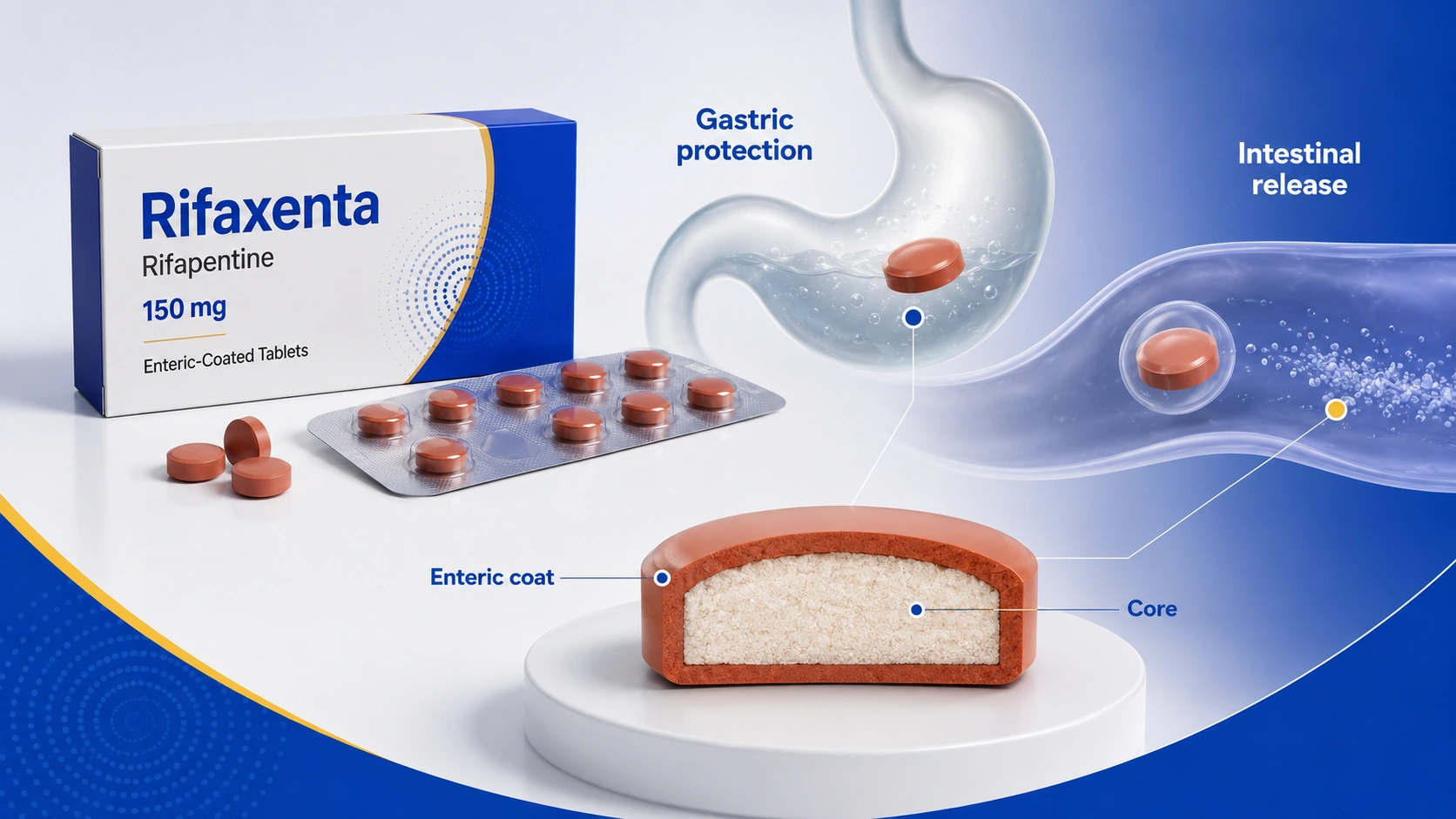
Enteric-coated dosage-form concept
The dosage-form strategy explores an enteric-coated tablet architecture intended to protect the tablet core during gastric exposure and support release under intestinal conditions. The visual represents a proposed delivery concept rather than completed dissolution, bioavailability, or clinical-performance validation.
MANUFACTURING ARCHITECTURE
Manufacturing process system
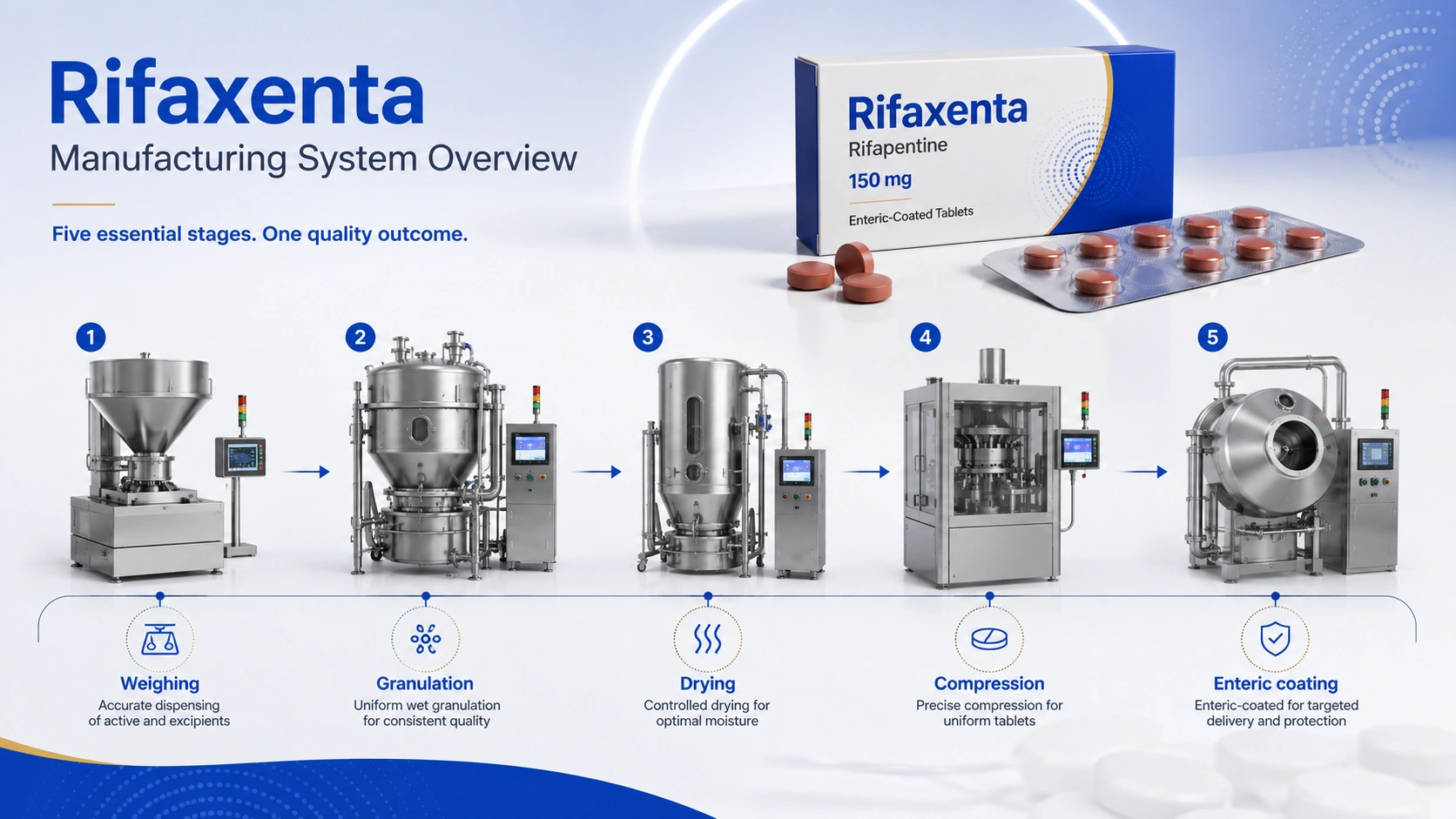
The proposed manufacturing architecture connects material dispensing, wet granulation, controlled drying, tablet compression, and enteric coating into one oral-solid-dosage process concept. Each stage would require defined material attributes, process parameters, in-process controls, and equipment qualification before implementation.
Process stage sequence
Weighing and raw-material dispensing
High-shear wet granulation
Fluidized-bed drying and sizing
Rotary tablet compression
Enteric film coating
PROCESS CONTROL
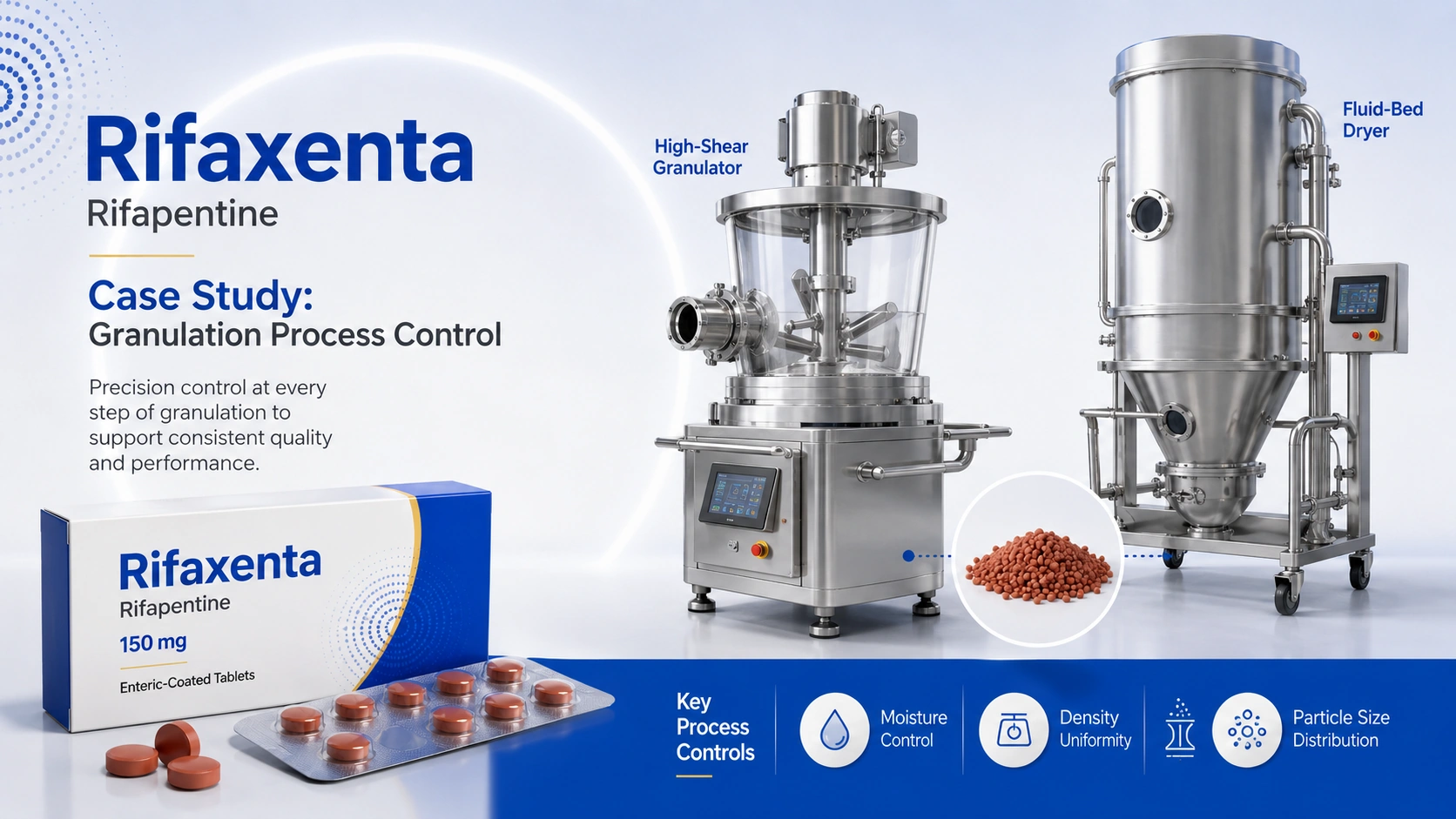
Granulation and drying controls
Granulation and drying were framed as critical stages because changes in moisture, particle distribution, density, and flow could affect downstream compression and coating consistency. The case study therefore proposes monitoring these attributes as part of a future development and process-control plan.
Qualitative control parameters
Moisture content control and loss-on-drying (LOD) monitoring
Granule particle-size distribution and bulk/tapped density consistency
Flowability behavior for uniform die filling
Binder addition timing and high-shear granulation endpoint determination
Fluid bed inlet temperature, airflow, and drying uniformity
COATING STRATEGY
Compression and enteric-coating system
The compression and coating strategy links tablet formation with a subsequent enteric-film application step. Proposed control considerations include tablet uniformity, mechanical integrity, coating distribution, spray conditions, inlet-air conditions, drying behavior, and compatibility between the tablet core and coating system.

QUALITY STRATEGY
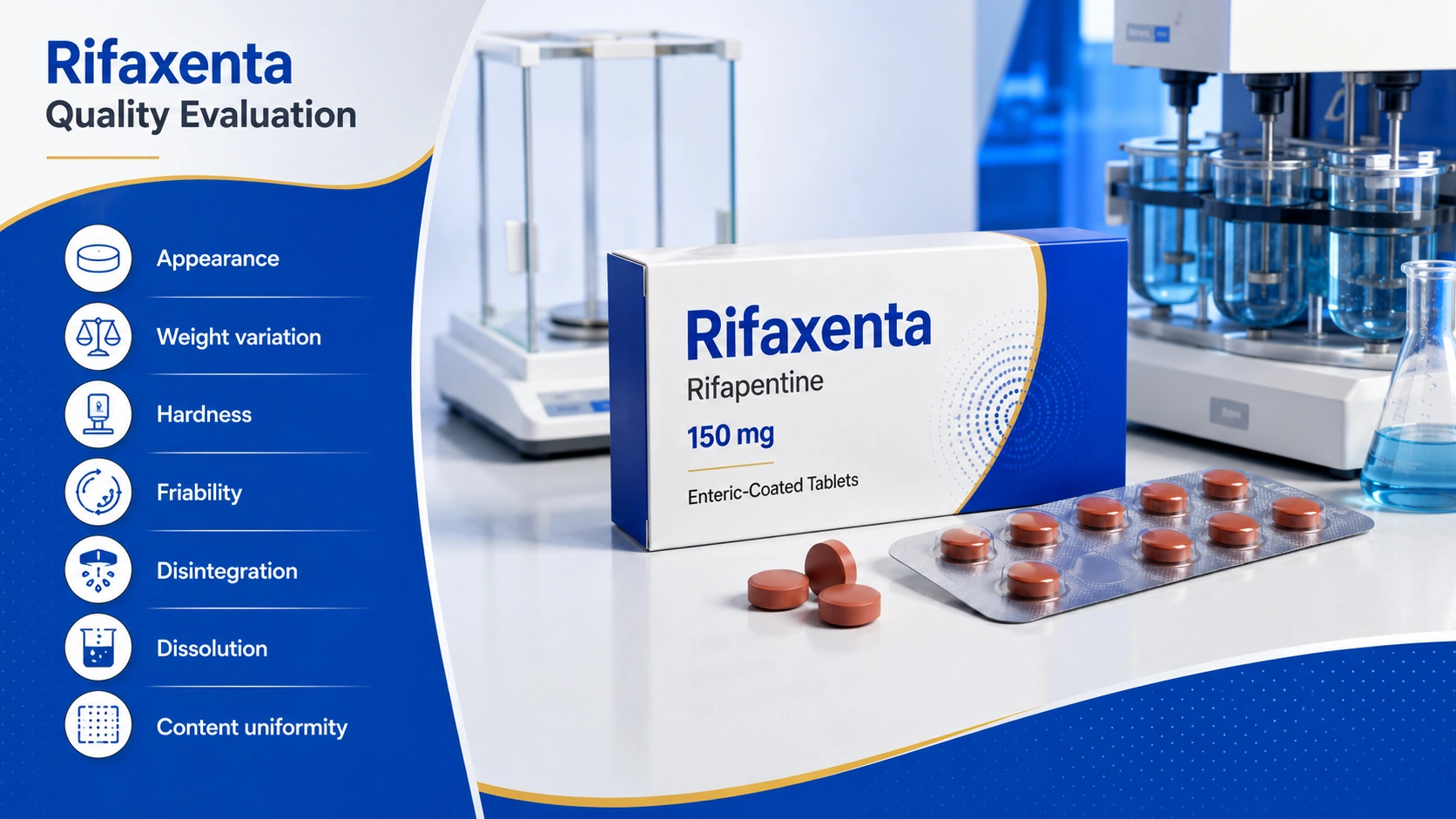
Proposed quality-evaluation framework
The quality framework outlines the evaluations that would be needed to characterize tablet appearance, mechanical properties, dosage consistency, disintegration behavior, dissolution performance, and drug-content uniformity during future development.
Proposed evaluation categories
Appearance: Color, surface smoothness, and coating integrity
Weight variation: Individual and average weight uniformity
Hardness: Crushing strength to withstand handling
Friability: Percentage weight loss during mechanical agitation
Disintegration: Gastric resistance and intestinal breakup timing
Dissolution: Rate and extent of active release
Content uniformity: Assay consistency across batch samples
ACCESS STRATEGY
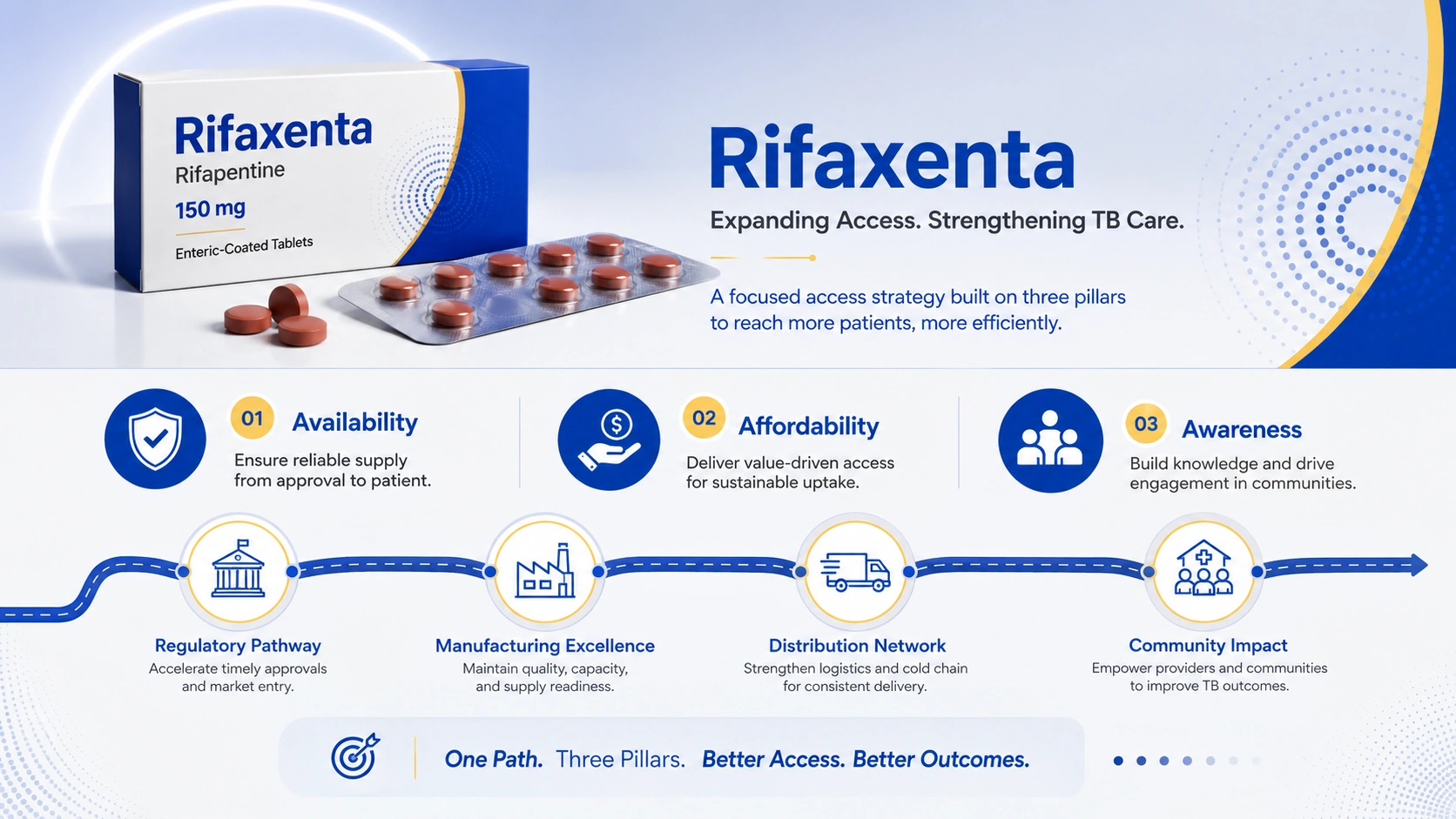
Availability, affordability, and awareness
The access strategy extends beyond formulation and manufacturing by considering three implementation pillars: availability through dependable supply and distribution, affordability through sustainable production and access planning, and awareness through responsible communication with healthcare and community stakeholders.
Three implementation pillars
Availability: Dependable manufacturing supply, regional logistics, and climate-stable distribution
Affordability: Sustainable production economics, procurement planning, and health-system access modeling
Awareness: Stakeholder engagement, healthcare provider guidance, and community education
RISK AND FUTURE DIRECTIONS
Risks and development priorities
Future development would require coordinated pharmaceutical, clinical, regulatory, manufacturing, and public-health assessment before the concept could progress beyond a competition case study.
Key development priorities
Formulation and dosing strategy refinement
Enteric-coating polymer selection and coating-process robustness
In vitro and in vivo safety and tolerability assessment
Manufacturing scale-up and process validation planning
Cost of goods optimization and raw-material supply security
Antimicrobial resistance stewardship and adherence support
Regulatory approval pathway identification
Climate-stable packaging and distribution planning
FINAL CONCEPT
Project outcome
Rifaxenta brought dosage-form design, manufacturing architecture, process-control planning, quality evaluation, and accessibility considerations into one integrated pharmaceutical case study. The project demonstrated how an oral-solid-dosage concept can be assessed not only through its formulation and production pathway, but also through the practical conditions required for responsible future implementation.
The product visuals, manufacturing system, quality framework, and access roadmap are illustrative. Rifaxenta has not undergone completed product development, regulatory assessment, or clinical validation.
Contribution
Manufacturing process design, process control identification, quality evaluation mapping, and accessibility framework synthesis.
Reflection
Demonstrated how dosage-form engineering and global health accessibility must operate together to support responsible pharmaceutical development.