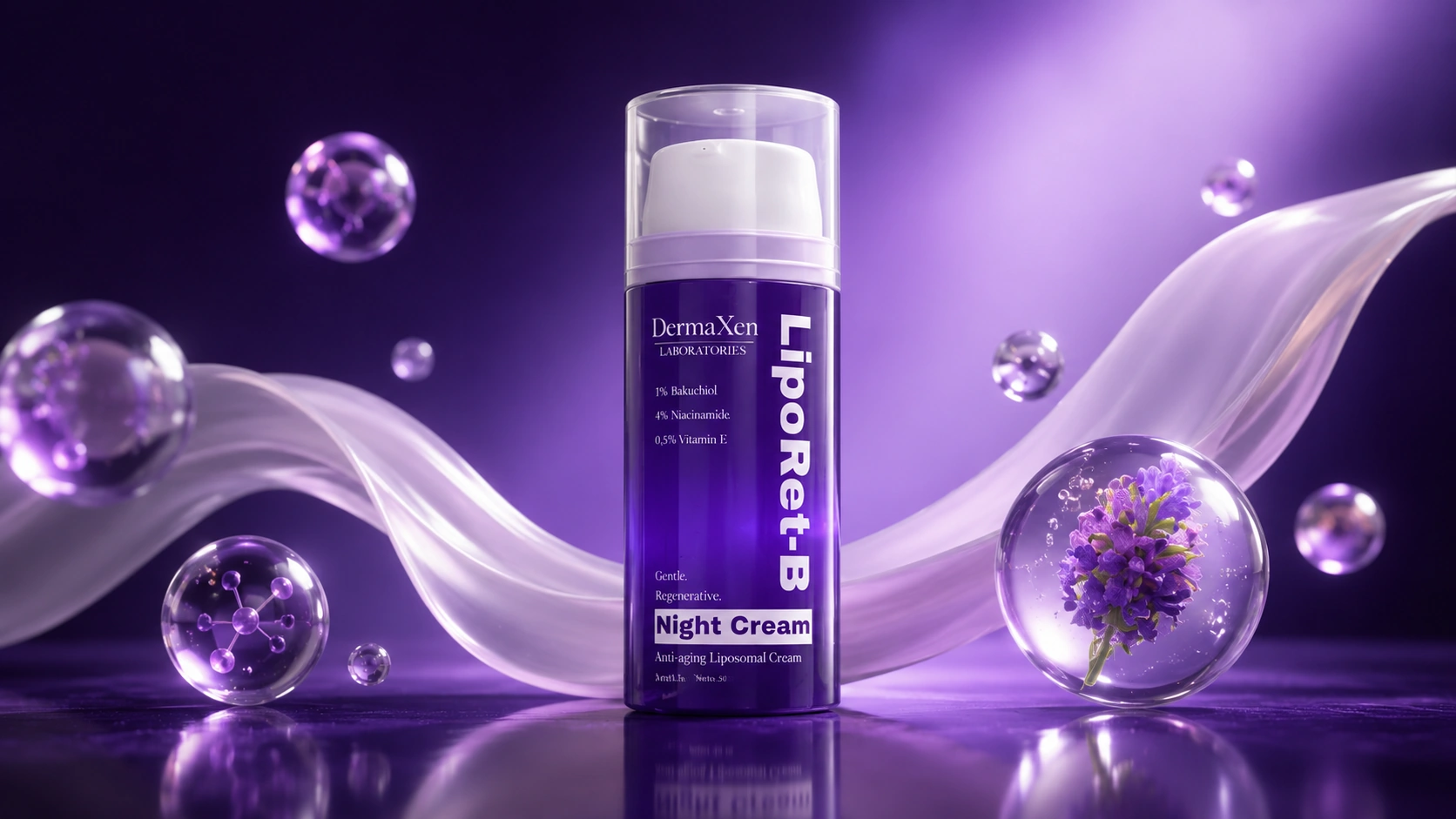
LipoRet-B
A scenario-based strategy integrating quality investigation, root-cause analysis, corrective and preventive actions, formulation controls, and a trust-led market relaunch for a sensitive-skin night cream.
IPSF PHARMAOLYMPICS 2025
3rd Winner - Industrial Skills Event (International)
July 2025
Problem
Reports of redness, itching, and stinging associated with a sensitive-skin night cream batch required an immediate quality investigation spanning formulation pH, antioxidant protection, manufacturing controls, and packaging.
PROJECT OVERVIEW
At a glance
Product Concept
Liposomal bakuchiol night cream
Primary Challenge
Formulation instability and sensitive-skin complaints
Strategic Scope
Quality investigation, CAPA, QbD, and market relaunch
Target Audience
Sensitive and mature skin
LipoRet-B explores how a sensitive-skin night cream could be reassessed after a product-quality scenario revealed weaknesses in formulation control, oxidative stability, sensory acceptance, and consumer trust.
This case study presents a competition-based reformulation and relaunch strategy developed from a product-quality scenario. The corrective actions, preventive actions, safety studies, and market-relaunch activities described were proposed rather than executed as a commercial development program.
PROJECT CONTEXT
Why LipoRet-B required reformulation
The case scenario begins with reports of redness, itching, and stinging associated with one product batch. The investigation therefore moved beyond product positioning and examined whether formulation design, manufacturing controls, packaging, and stability monitoring could have contributed to the observed quality concerns.
QUALITY INVESTIGATION
What the initial quality review identified
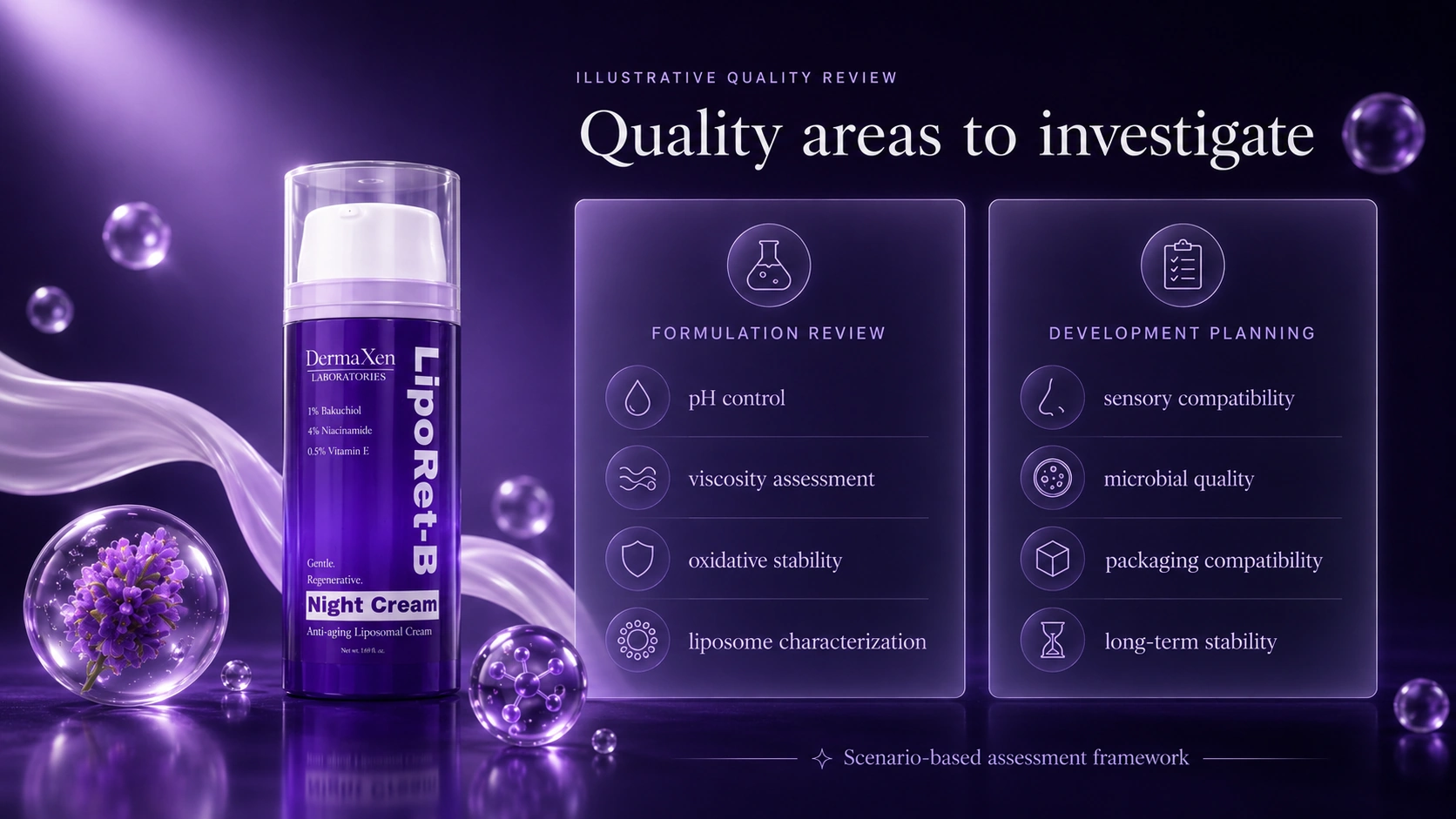
The quality evaluation separated parameters meeting initial design expectations from critical quality attributes requiring further investigation and formulation correction.
Areas requiring further investigation
pH control review: Final pH outside the intended target range
Antioxidant capacity review: Oxidative stability limit requiring adjustment
Sensory compatibility assessment: User texture feedback requiring formulation refinement
Color stability observation: Faint color change observed during initial storage monitoring
Areas meeting scenario expectations
Viscosity assessment: Maintained within expected flow and application limits
Moisturizing retention assessment: Met initial hydration retention expectations
Zeta potential evaluation: Surface charge within expected electrokinetic stability bounds
Liposome characterization: Vesicle size and size distribution within design targets
Freeze-thaw stability assessment: Preserved physical integrity through temperature cycling
Microbial quality planning: Met scenario-defined microbiological criteria
ROOT-CAUSE ARCHITECTURE
Tracing the quality failure across formulation and process
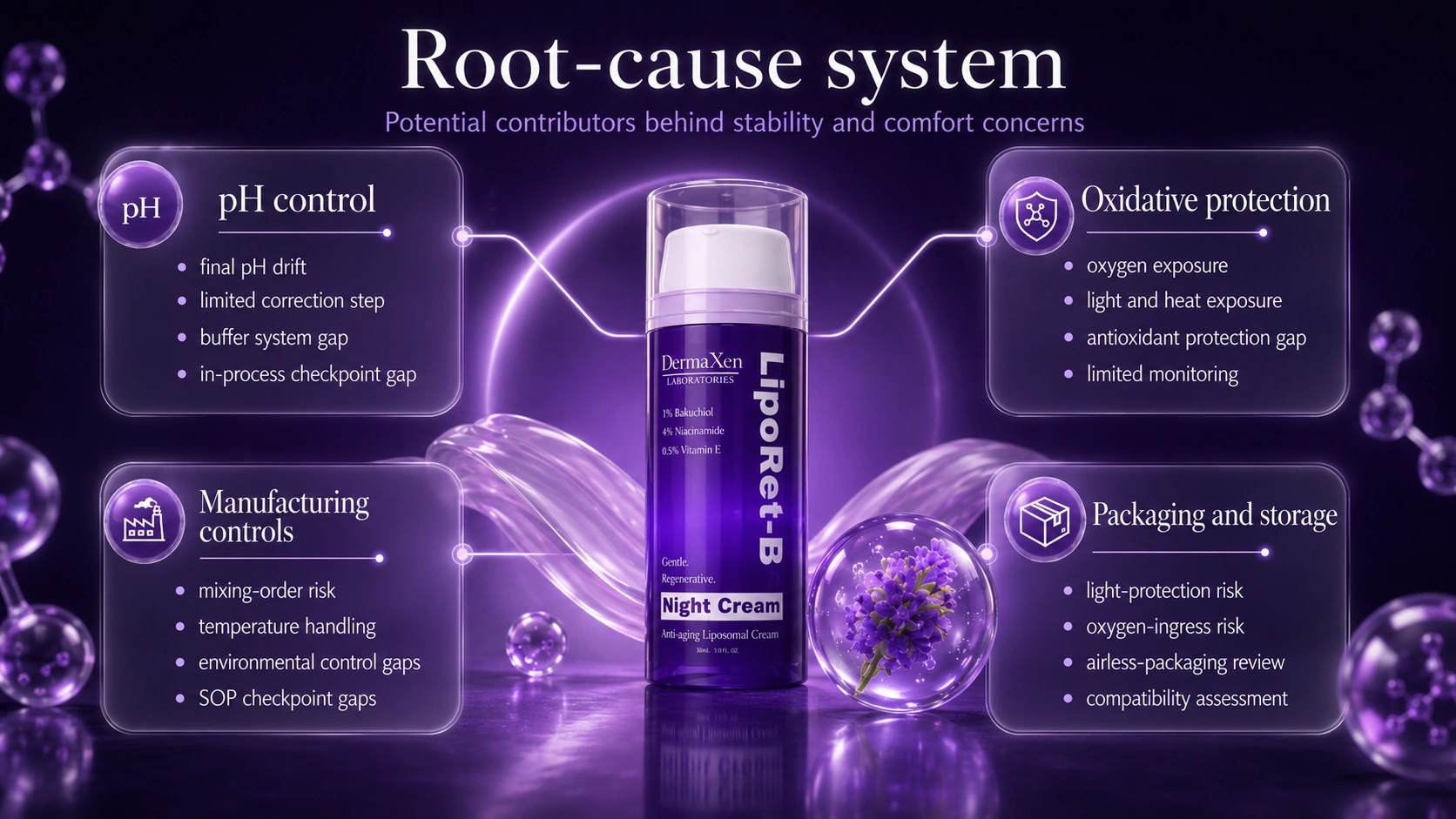
The root-cause analysis traced observed quality variations across four interconnected operational areas to prevent recurring instability.
01 - pH control
Final pH outside the intended range
No final acidification or correction step
No compatible buffering system
No defined IPC checkpoint for pH
pH not adequately treated as a critical quality attribute
02 - Oxidative protection
Insufficient antioxidant protection
Oxygen exposure during processing
Limited protection from light and heat
Lack of oxidative-stability monitoring
03 - Manufacturing controls
No nitrogen blanketing strategy
Inadequate control of mixing environment
Insufficient SOP checkpoints
Limited process-risk identification
04 - Packaging and storage
Insufficient light protection
Non-airless packaging risk
Uncontrolled exposure to oxygen and temperature
Packaging compatibility requiring further assessment
REFORMULATION STRATEGY
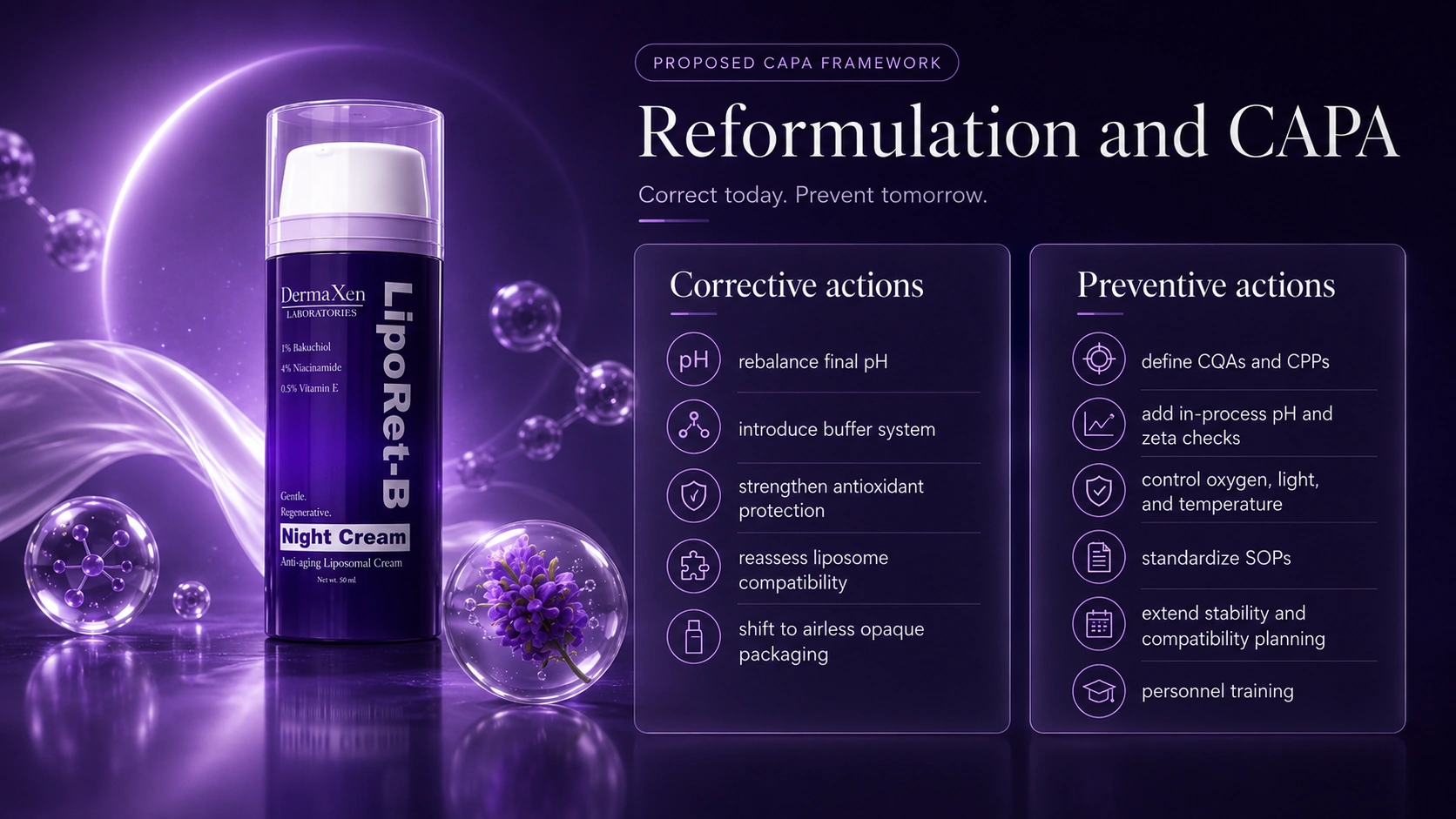
Corrective and preventive action framework
The proposed CAPA strategy addresses root causes through immediate formulation adjustments and long-term process standardization.
Corrective actions
Adjust the final pH toward a proposed skin-compatible target
Introduce a compatible buffer system
Verify zeta potential after pH adjustment
Strengthen antioxidant protection using compatible synergists
Reassess raw-material and formulation compatibility
Transition toward protective airless and opaque packaging
Preventive actions
Establish pH and zeta-potential IPC checkpoints
Define pH as a CQA and relevant process controls as CPPs
Add oxidative and long-term stability protocols
Introduce controlled-light, temperature, and oxygen conditions
Standardize SOPs for pH correction and antioxidant protection
Expand irritation, sensory, and compatibility testing plans
Train formulation, manufacturing, and QC personnel
QUALITY STRATEGY
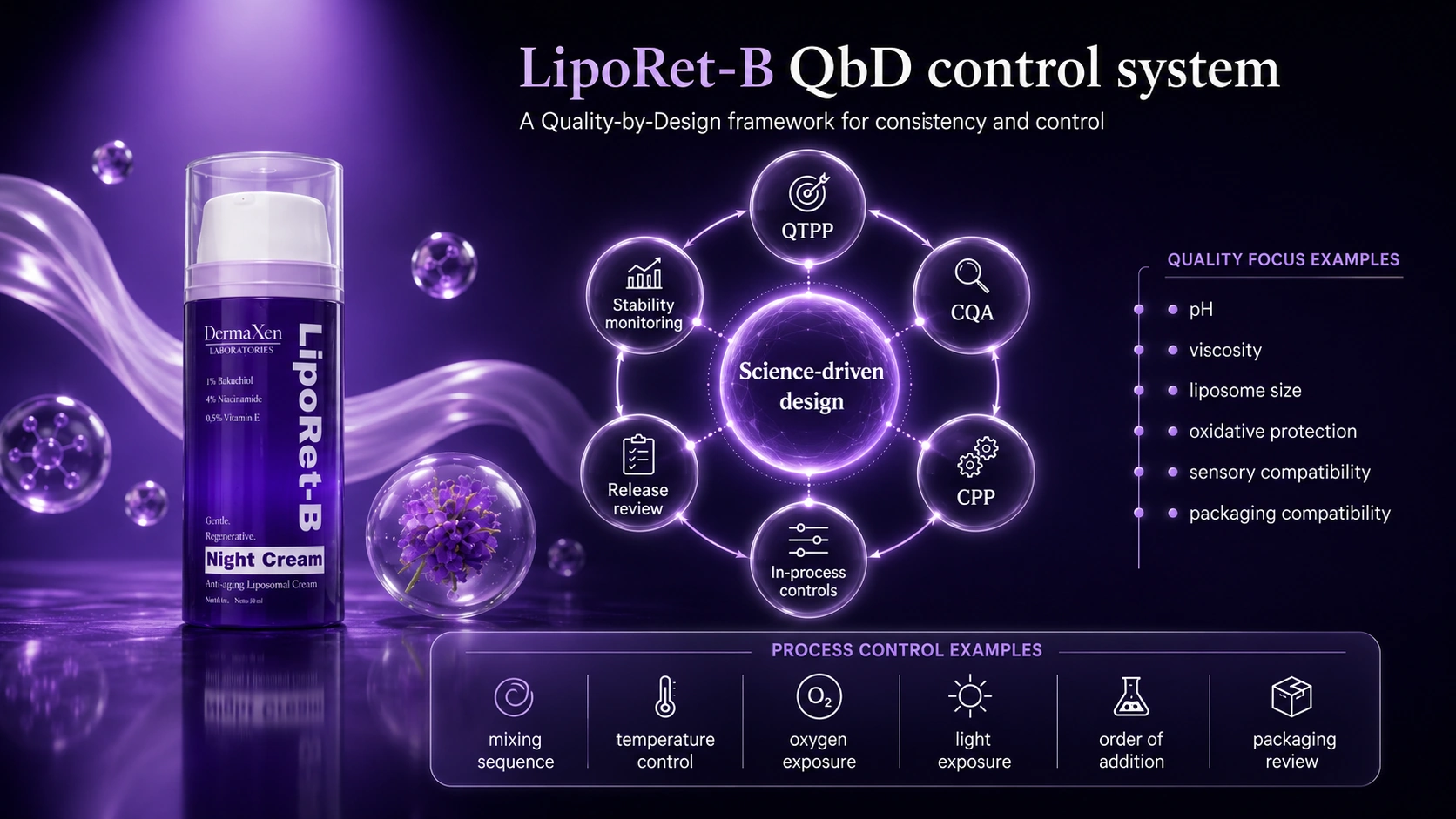
Building a quality-by-design control system
A Quality-by-Design (QbD) control framework links product quality targets to manufacturing parameters and release specifications.
Critical Quality Attributes (CQAs)
Target specifications established for pH, antioxidant capacity, color stability, viscosity, zeta potential, liposome size, PDI, microbial quality, and sensory acceptance.
Critical Process Parameters (CPPs)
Operational limits defined for timing and dilution of acid addition, mixing temperature, oxygen exposure, light exposure, order of ingredient addition, final pH verification, and packaging compatibility.
MARKET POSITIONING
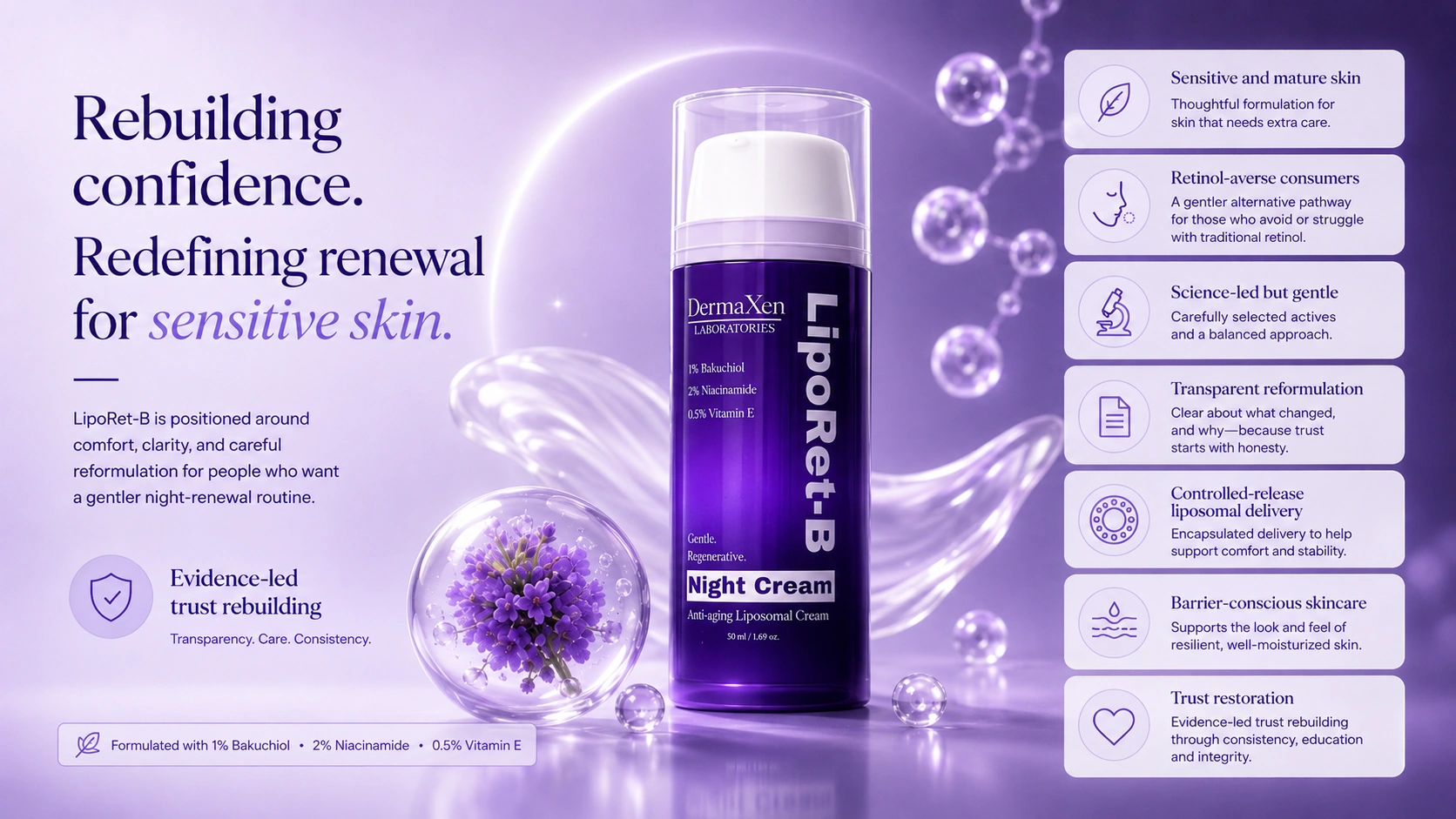
Rebuilding confidence around sensitive-skin performance
The market relaunch strategy centers on rebuilding consumer trust through transparent communication, gentle positioning, and evidence-backed formulation integrity.
Focus on sensitive and mature skin populations seeking retinol alternatives
Adopt science-led but gentle product messaging
Maintain transparency about formulation improvements
Communicate controlled-release liposomal technology and barrier protection
Establish evidence-led trust rebuilding protocols
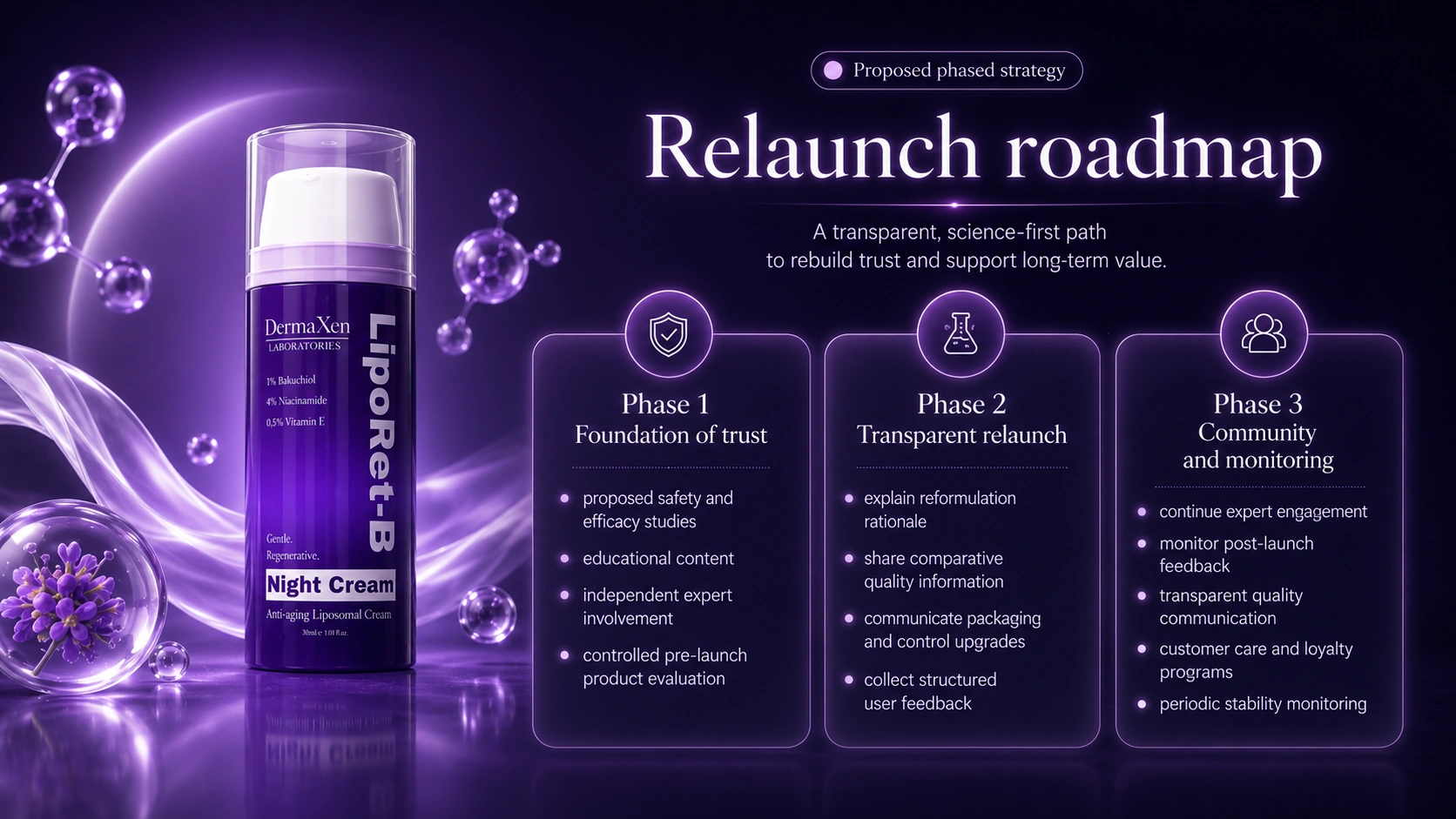
RELAUNCH ROADMAP
A phased strategy for rebuilding trust
The proposed relaunch roadmap unfolds across three structured phases to restore market confidence.
Phase 1 - Foundation of trust
Complete proposed safety and efficacy studies, prepare educational content, involve independent experts, and conduct controlled pre-launch product evaluation.
Phase 2 - Transparent relaunch
Explain the quality issue and reformulation rationale, publish accessible comparative quality information, communicate new controls and packaging improvements, and collect structured user feedback.
Phase 3 - Community and monitoring
Continue expert engagement, monitor post-launch feedback, maintain transparent quality communication, strengthen customer care and loyalty programs, and continue periodic stability and quality monitoring.
FINAL CONCEPT
Project outcome
The project produced an integrated reformulation and relaunch strategy connecting root-cause analysis, corrective and preventive actions, quality-by-design controls, sensitive-skin positioning, and transparent consumer communication.
Rather than treating formulation and marketing as separate workstreams, the case study shows how product quality, manufacturing controls, packaging, evidence generation, and trust rebuilding can be designed as one connected system.
The proposed reformulation, safety studies, and market-relaunch activities would require formal development, validation, regulatory review, and controlled implementation before commercial use.
Contribution
Formulation quality analysis, CAPA strategy development, QbD control system mapping, and market relaunch positioning.
Reflection
Demonstrated how formulation engineering and brand communication must operate as one connected system to resolve quality challenges and rebuild consumer trust.