Limora
Developing a botanical emulgel for sensitive-skin hydration and UV-focused care.
SCIENCE COMPETITION UNIVERSITAS SANATA DHARMA 2024
2nd Winner - Herbal Cosmetic Competition
October 2024
Problem
Sensitive skin requires hydration and a comfortable product texture in tropical environments, where UV exposure and oxidative stress create unique formulation demands.
PROJECT OVERVIEW
At a glance
Challenge
Supporting sensitive skin in a high-UV tropical environment
Approach
A botanical moisturizer and UV-focused emulgel prototype
Formulation
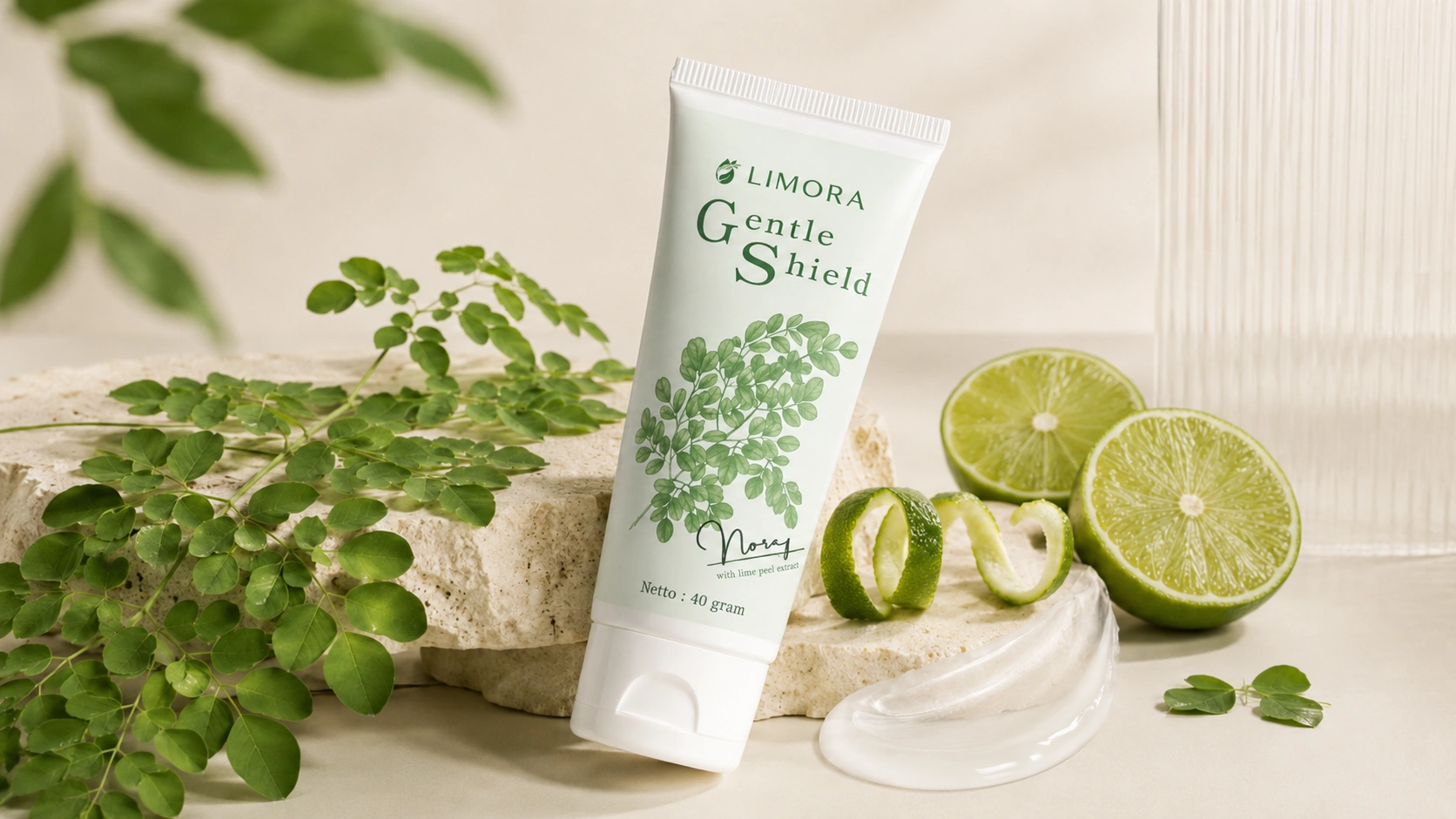
Moringa leaf and lime peel extracts in an emulsion-gel system
Evaluation
Physical characterization, short-term stability, hydration, and sensory checks
PROJECT CONTEXT
Why Limora was developed
Sensitive tropical skin requires daily hydration without feeling heavy or sticky. Formulating skincare for tropical environments demands a comfortable product texture alongside effective barrier support. To address these requirements, a botanical moisturizer concept was developed by combining Moringa oleifera leaf extract and Citrus aurantifolia peel extract into an emulsion-gel (emulgel) system. The emulgel format integrates an oil-in-water emulsion phase within a hydrophilic gel matrix, providing light application, pleasant spreadability, and active delivery.
Literature-informed botanical actives were selected to explore antioxidant and UV-absorbance characteristics. An evaluated prototype was prepared and subjected to physical characterization, short-term stability testing, skin hydration monitoring, extract UV absorbance evaluation, and preliminary sensory assessment.
The project evaluated prototype characteristics, short-term stability, hydration readings, extract UV absorbance, and sensory observations. Finished-product SPF, clinical efficacy, irritation testing, and long-term stability were not established.
BOTANICAL STRATEGY
Botanical ingredient strategy
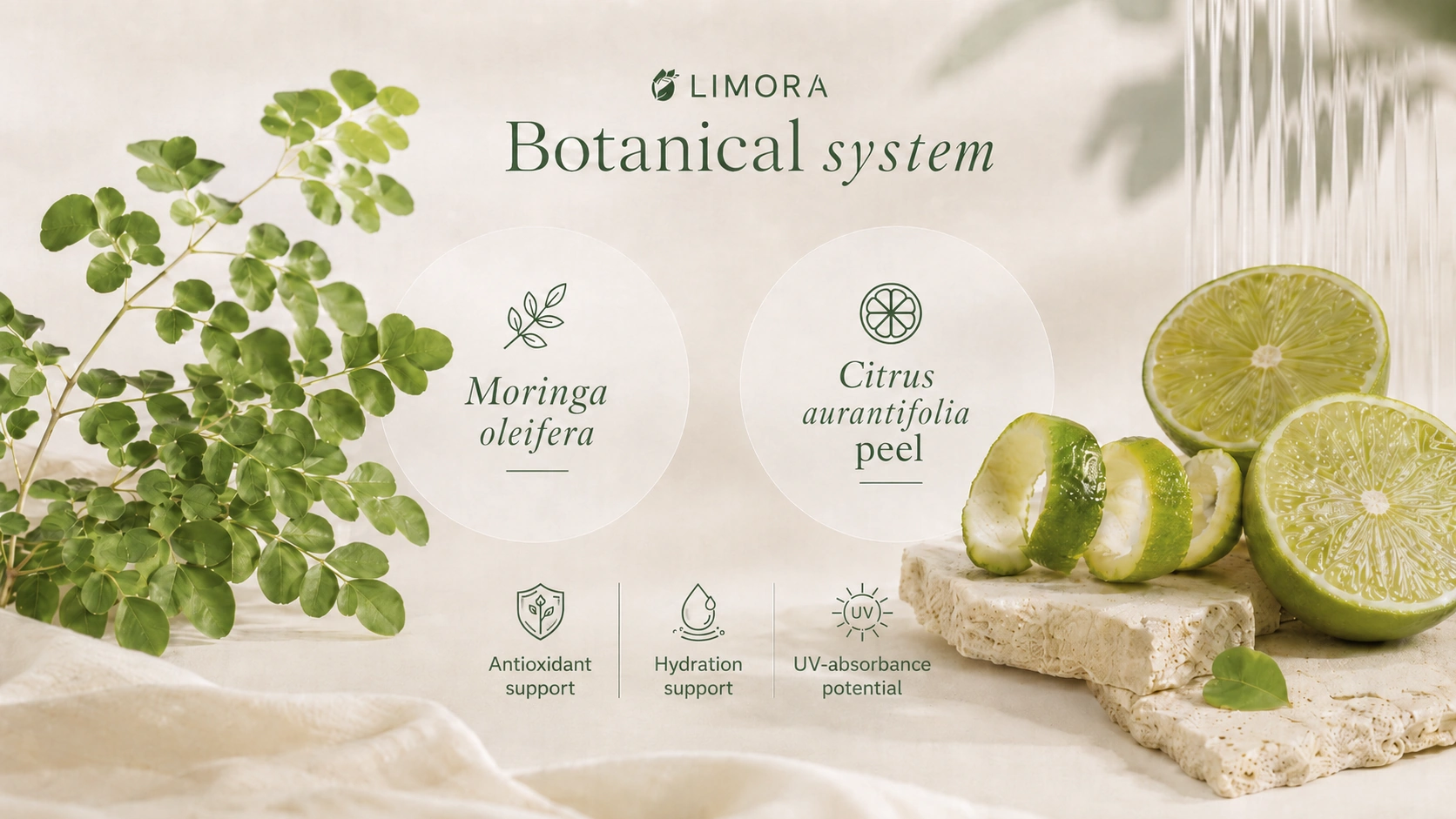
Moringa oleifera leaf extract
A literature-informed botanical component considered for its antioxidant, soothing, and moisturizing potential.
Citrus aurantifolia peel extract
A literature-informed botanical component considered for antioxidant and UV-absorbance exploration.
The proposed botanical functions were developed from literature and prototype evaluation. Finished-product SPF and clinical efficacy were not established.
FORMULATION ARCHITECTURE
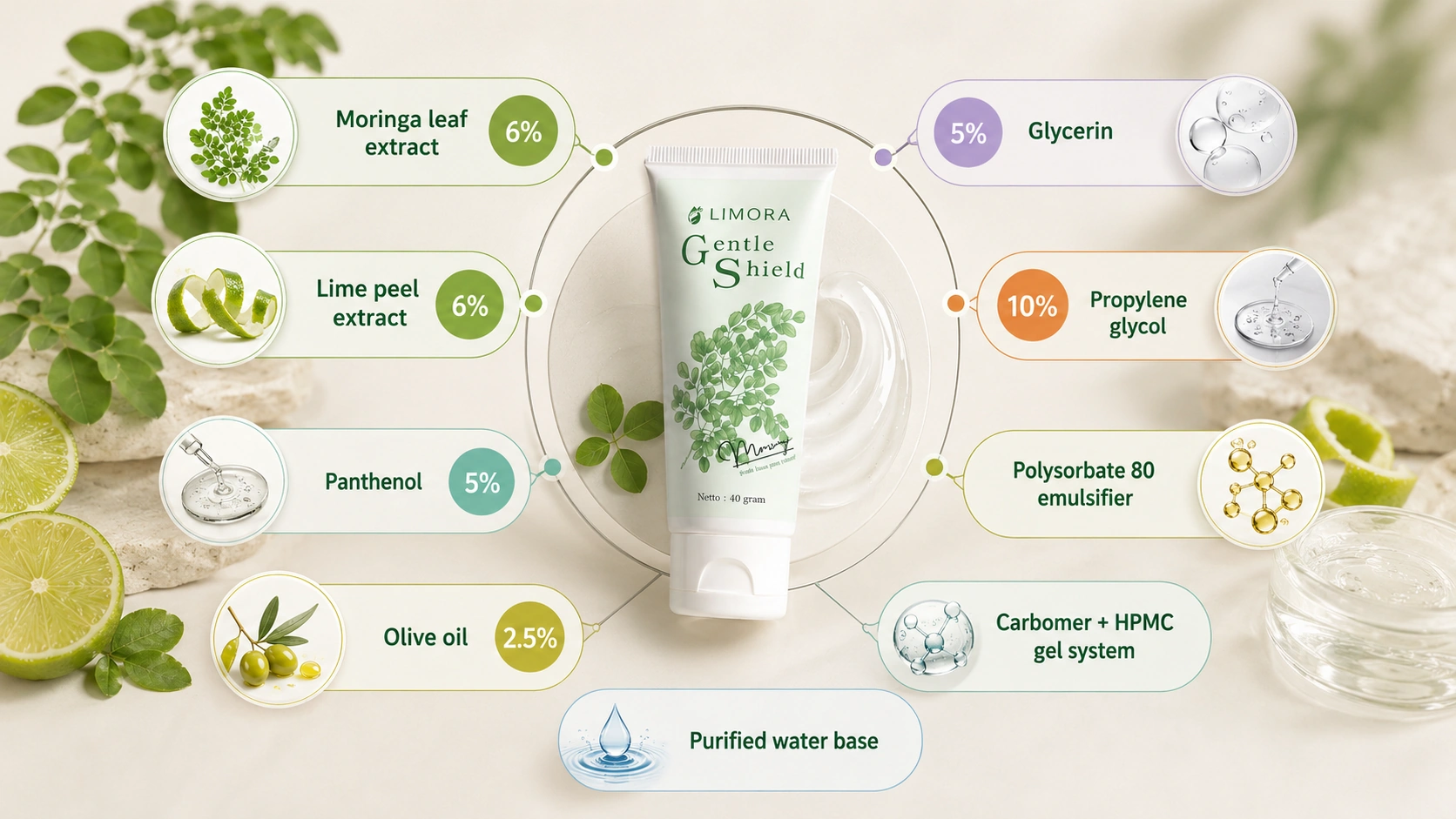
Emulgel formulation architecture
Moringa oleifera leaf extract - 6%
Citrus aurantifolia peel extract - 6%
Panthenol - 5%
Glycerin - 5%
Propylene glycol - 10%
Olive oil - 2.5%
Carbomer and HPMC - gel system
Polysorbate 80 - emulsification system
Purified water - continuous phase
DEVELOPMENT PROCESS
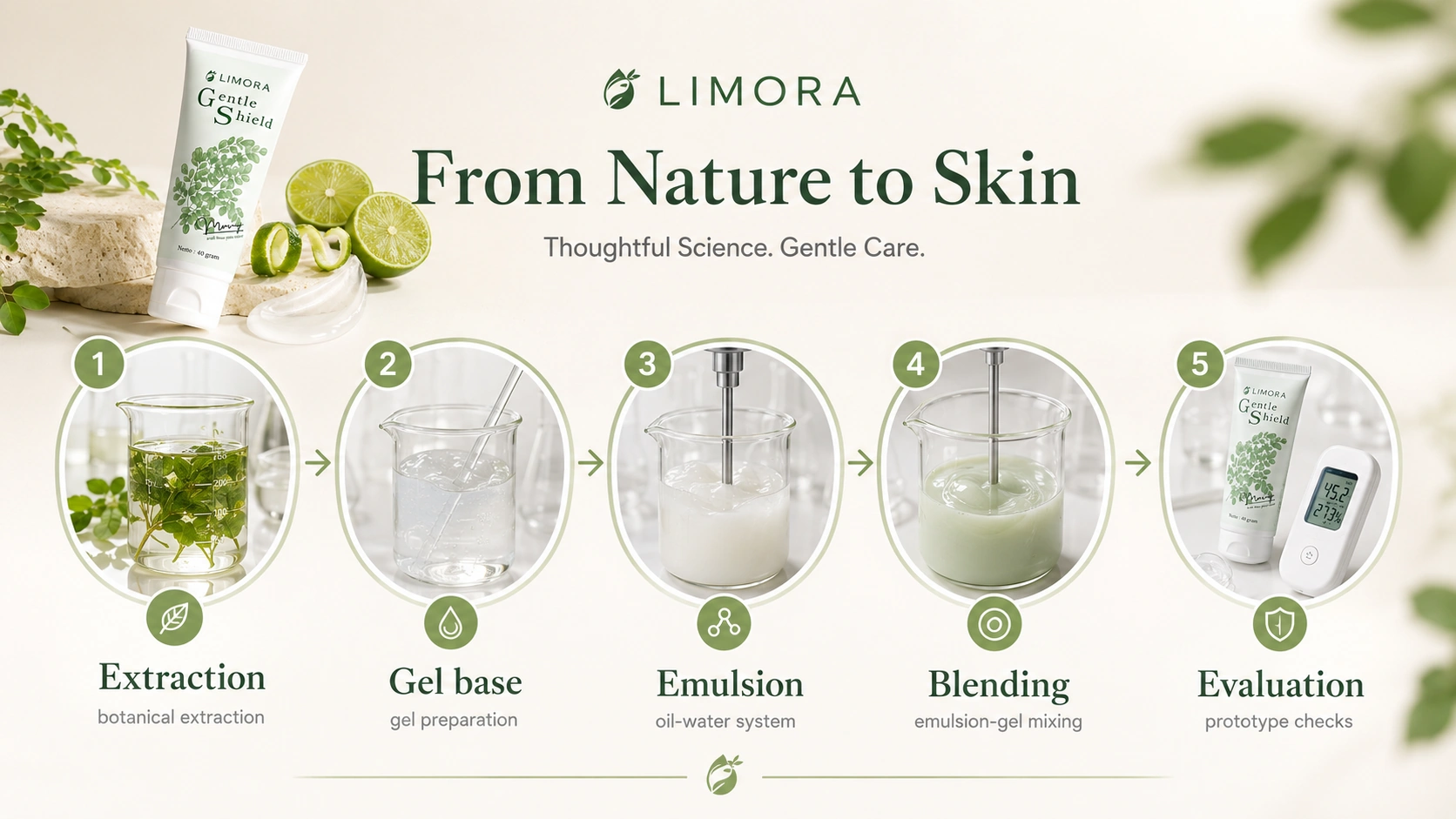
From botanical extraction to prototype
Botanical extraction
Gel-base preparation
Emulsion preparation
Emulsion-gel blending
Prototype evaluation
PROTOTYPE EVALUATION
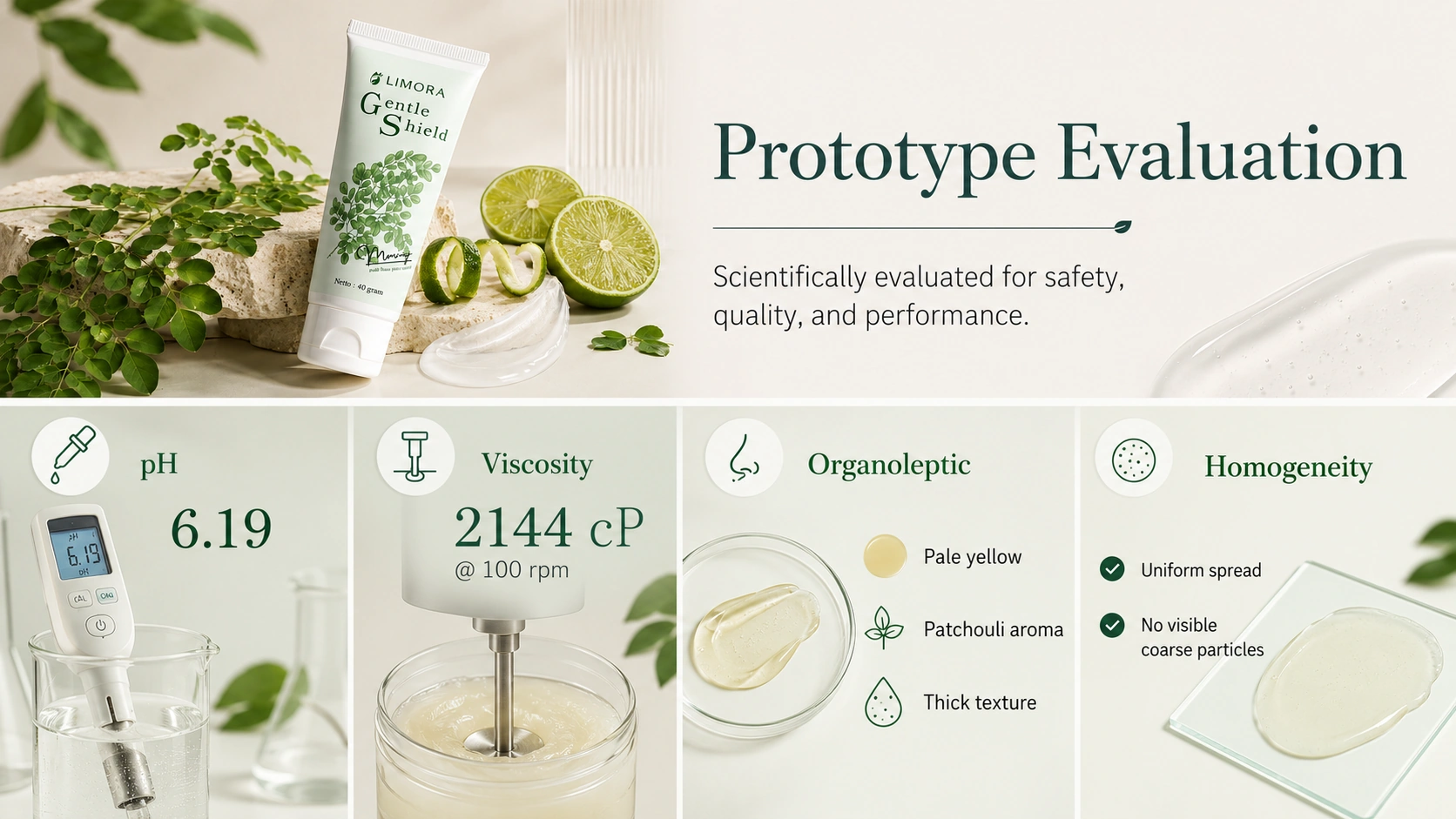
Prototype characterization
pH: 6.19
Measured prototype result within the reported skin-compatible reference range used by the project.
Viscosity: 2144 cP at 100 rpm
Measured using a Brookfield viscometer under the reported prototype test condition.
Organoleptic profile
Pale yellow, patchouli aroma, and thick texture.
Homogeneity
Visually uniform with no visible coarse particles.
STABILITY ASSESSMENT
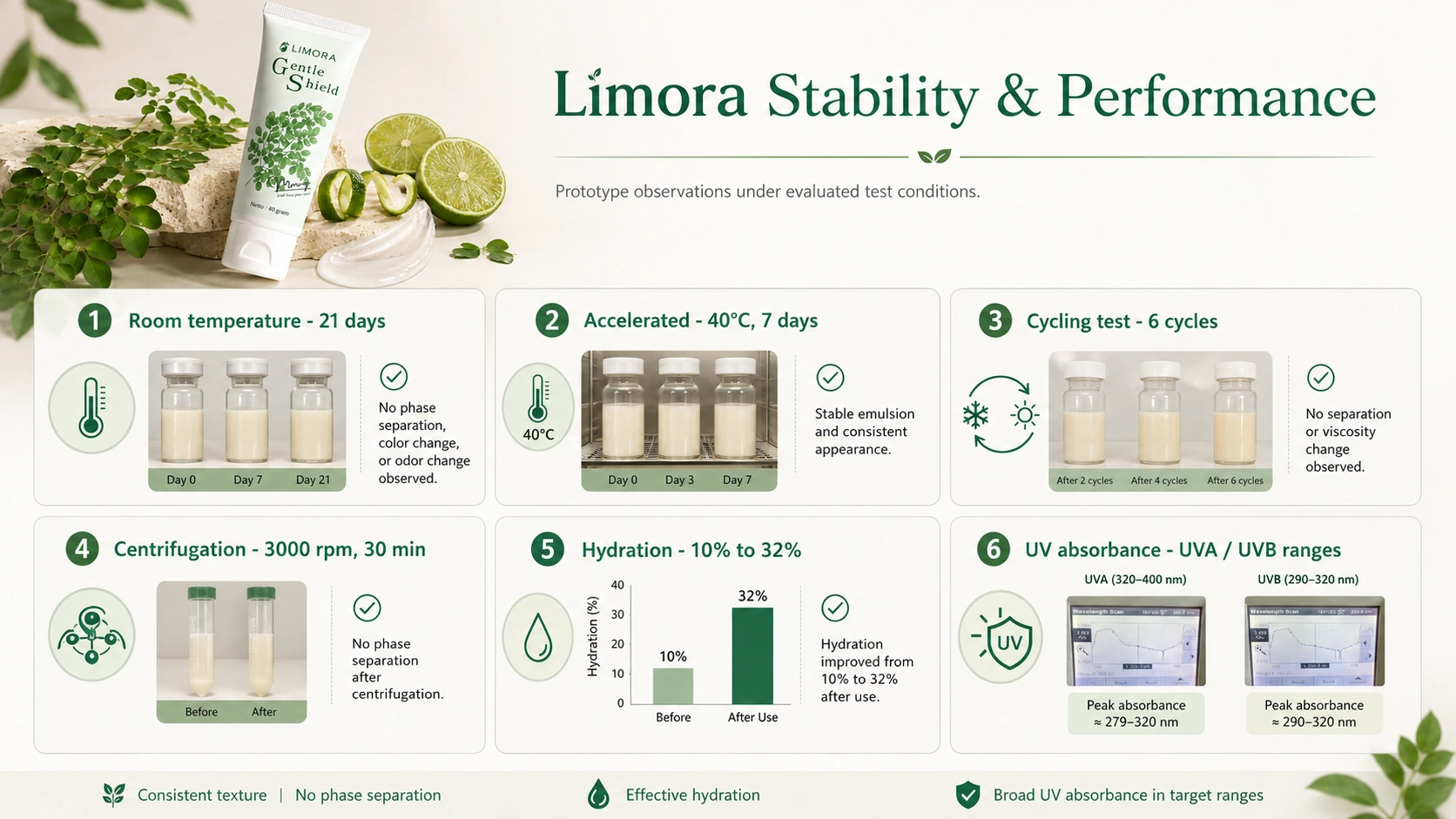
Short-term stability and physical performance
Room temperature - 21 days
Accelerated condition - 40°C for 7 days
Cycling test - 6 cycles
Centrifugation - 3000 rpm for 30 minutes
The prototype showed no visible phase separation or major organoleptic change under the evaluated short-term test conditions.
PERFORMANCE EXPLORATION
Hydration, UV absorbance, and sensory observations
Hydration reading: 10% to 32%
The reported instrument reading increased after prototype application under the project test method.
UV absorbance: UVA and UVB ranges
The evaluated moringa and lime-peel extracts showed absorbance in the reported UVA and UVB wavelength ranges.
Sensory observations
Respondents generally described the prototype as light, cooling, spreadable, and moisturizing.
Extract absorbance does not represent a finished-product SPF value.
SAFETY AND NEXT STEPS
Safety screening and next steps
Future validation pathways for Limora include preliminary heavy-metal comparison, formal irritation or patch testing, finished-product SPF determination, broader microbiological evaluation, longer real-time stability monitoring, and improved control of potentially photosensitizing citrus components.
FINAL CONCEPT
Project outcome
Limora developed from a botanical formulation proposal into an evaluated emulgel prototype, connecting ingredient research, emulsion-gel engineering, laboratory characterization, short-term stability assessment, and sensitive-skin product experience.
Contribution
Formulation optimization, botanical extract characterization, and prototype physical evaluation.
Reflection
This project demonstrated how literature-informed botanical actives can be successfully engineered into a stable emulgel system for sensitive-skin applications.